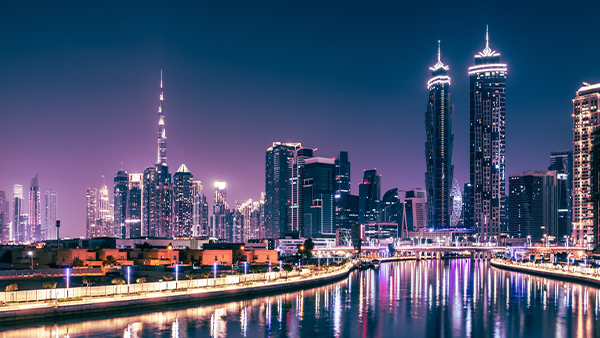
Dubai property investment opportunities during volatility - Danube
CategoriesBlogs

Strategic Real Estate Framework for HNIs During Market Volatility in the UAE

There’s a noticeable difference between investors who participate in real estate and those who structure it.

The former react to cycles while the latter builds through them.

That distinction is exactly where the modern HNI property strategy in the UAE begins to take shape, especially in a market like Dubai.

Over the past two decades, Dubai has evolved into a market where this level of strategic investing is increasingly necessary.

Estate decisions are being aligned with long-term objectives, backed by data, structure, and clarity. They are now grounded in disciplined allocation, regulatory strength, and reinforced by a market that has matured through experience.

Dubai: A Market Defined by Evolution

The transformation of Dubai’s real estate sector is best understood through its response to global disruptions.

During the 2008 financial crisis, the market experienced a sharp correction, with price declines reaching nearly 50% in some segments.

This phase led to the introduction of escrow regulations, tighter oversight of developers, and structured project financing, laying the foundation for a more transparent ecosystem.

In 2020, global uncertainty returned in a different form.

The pandemic affected liquidity and mobility, yet the recovery trajectory was notably faster. Policy agility, digital adoption, and international investor participation accelerated market activity.

By 2025, annual real estate transactions in Dubai crossed AED 917 billion, reflecting sustained investor confidence.

The luxury segment recorded over 500 transactions above $10 million, positioning the city among the world’s leading ultra-prime markets, including 68 homes worth more than $25 million.

This progression has shaped a market where property investment in Dubai is now viewed through a long-term, institutional lens.

Structural Drivers Behind Sustained Demand

Several underlying factors continue to support demand across segments of property in Dubai:

As of March 2026, the UAE’s population touched 11.57 million, with the emirate’s population exceeding 4.47 million in 2025, driven by business expansion and skilled migration.

Projects aligned with the Dubai 2040 Urban Master Plan continue to enhance connectivity and urban planning.

Long-term residency programs and the Golden Visa have strengthened end-user demand, and the city has established itself as a global hub for premium real estate, attracting international capital.

Even within the broader geopolitical landscape following the current escalation, Dubai’s positioning as a stable economic hub continues to influence capital flow.

It’s because Dubai’s market chases long-term value over market cycles. To understand this, read What Makes a Dubai Property Truly ‘Future-Proof’ for Investors.

The UAE Advantage

The country’s GDP plays a very important role in real estate conversations, serving as the macro layer supporting it.

The UAE economy itself has been expanding consistently.

In 2025, the nominal GDP reached $569.1 billion with strong per capita income levels and high global rankings, and is now estimated at around $601.2 billion in 2026.

More importantly, growth is no longer oil-dependent.

  • The non-oil sector contributes over 73% of GDP
  • Economic expansion is being driven by finance, tourism, construction, and real estate
  • GDP growth is projected to be around 5% for 2025-2026
  • Population growth continues to be driven by expatriate inflows, which directly support housing demand

There is also a structural shift underway.

UAE Economic Comparison: 2024 vs 2025 vs 2026


Indicator 2024 2025 2026 (Forecast)
Real GDP Growth 4.8% 5% 6%
Non-Oil GDP Growth 4.6% 6.1% 4.8%
(post current situations)
Oil Sector Growth 5.3% 6.3% 7%
Economic Drivers Trade, tourism, real estate, logistics Strong non-oil expansion + oil output recovery Full-cycle growth across oil + non-oil sectors
Economic Positioning Stable post-pandemic expansion Accelerated growth phase Peak diversification + expansion cycle


The UAE’s economic strategy is focused on long-term capital inflow, diversification, and private sector expansion, supported by initiatives like the National Investment Strategy 2031.

That context matters because property in Dubai reflects the direction of the broader economy.

A Structured Framework for HNIs

A consistent approach to real estate allocation begins with a clearly defined framework. The following steps reflect how experienced investors structure their portfolios within the UAE market.

Step 1: Define Investment Goals

For a market as dynamic as Dubai’s real estate, clarity of intent shapes asset selection.

Investment goals may include income generation, capital appreciation, or long-term wealth preservation.

Each objective corresponds to a different category of property investment in Dubai, ranging from rental-focused apartments to high-value branded residences.

Step 2: Assess Risk Tolerance

In real estate, risk is categorized across multiple dimensions:

  • Market risk: exposure to price fluctuations
  • Liquidity risk: ease of resale or leasing
  • Financial risk: leverage and cash flow considerations
  • Regulatory risk: evolving policies related to ownership and tenancy

A clear understanding of these factors supports effective capital preservation for HNIs, particularly in dynamic market conditions.

Step 3: Allocate Capital Strategically

Strategic allocation ensures balance.

Rather than concentrating capital in a single segment, investors distribute across multiple asset types.

This approach supports the creation of a diversified real estate portfolio to balance stability with growth potential.

Step 4: Conduct Macro and Micro Market Analysis

Market analysis operates at two levels.

At the macro level, factors such as population growth, economic diversification, and infrastructure investment shape overall demand, which are well in favor of Dubai’s real estate market.

At the micro level, location-specific indicators like rental yields, tenant demographics, and accessibility determine asset performance. This may help investors differentiate property types for personal investment goals.

This layered analysis helps identify opportunities where property investment in Dubai aligns with both current demand and future growth.

Step 5: Assess Developer and Asset Quality

Developer credibility plays a central role in investment outcomes.

Key considerations include:

  • Track record of project delivery
  • Construction quality and materials
  • Efficiency of property management
  • Occupancy rates and tenant feedback

Danube Properties offers a value-oriented approach, combining accessible pricing and features that support long-term demand, with consistent delivery standards, making it an investor favorite over the last decade.

Step 6: Analyze Supply and Demand

Supply-demand dynamics directly influence returns.

Balanced markets tend to support rental stability and capital appreciation.

Emerging areas may offer strong growth potential, particularly when infrastructure development aligns with population expansion.

Step 7: Define Exit Strategies

Exit planning is an integral component of investment structuring.

Options may include capitalizing on market cycles, transitioning assets into rental income streams, or reallocating capital within the portfolio.

This ensures that each property investment in Dubai aligns with a broader financial strategy and personal wealth management goals.

Step 8: Monitor and Adjust

For any market, continuous monitoring is essential and supports long-term alignment.

Change is constant. And tracking changes in rental performance, infrastructure developments, and regulatory updates enables timely adjustments.

This approach maintains portfolio relevance within evolving market conditions.

Step 9: Portfolio Integration

Real estate functions as part of a larger wealth structure. Integrating it with other asset classes enhances overall portfolio resilience.

Within diversified portfolios, property investment in Dubai is used as a combination of income generation and asset-backed stability.

Step 10: Maintain Discipline

Consistency remains a defining factor.

Mohamed Alabbar, founder of Emaar, consistently emphasized that real estate success is built on long-term thinking rather than short-term gains.

Dubai’s regulatory framework and long-term vision reinforce confidence in the same direction.

For an insightful approach to structuring returns, read How to Build a Profitable Real Estate Portfolio in Dubai in 2026.

Dubai’s Position in Global HNI Portfolios

The inclusion of property in Dubai within HNI portfolios reflects a combination of financial and structural advantages:

  • Tax efficiency: absence of property and income tax
  • Rental yields: averaging 6-10% in prime locations
  • Currency stability: AED’s peg to the US dollar
  • Global connectivity: a central hub linking major international markets

These factors contribute to the sustained appeal of acquiring a house for sale in Dubai, particularly among international investors seeking good deals and long-term allocation.

Real Estate Investment in Dubai: A Strategic Leverage

Strategic real estate investment is defined by structure, consistency, and alignment with long-term objectives.

Dubai’s market has evolved through regulatory reform, infrastructure expansion, and global integration. This progression has created an environment where disciplined frameworks guide decision-making across cycles.

The application of a structured HNI property strategy in the UAE is supported by diversification, quality asset selection, and continuous portfolio alignment, positioning real estate as a residence-leverage and a central component of long-term wealth management.

Within this framework, property investment in Dubai continues to offer stability, scalability, and global relevance, reinforcing its role in sophisticated investment portfolios.

Geopolitical impact on Gulf property
CategoriesBlogs

How Geopolitical Tensions in the Middle East Could Impact Gulf Property Markets

Geopolitics influence capital flow more deeply than most market indicators.

And in the Middle East, it’s more immediate.

Policy decisions, regional alignments, and conflict developments move through energy markets, fiscal balances, and investor positioning before reaching real estate.

The current phase of Middle East geopolitical risk, influenced by the ongoing situation, is reinforcing this chain of impact across the Gulf property market.

However, this is not a temporary reaction cycle. It is a structured transmission of economic signals.

When these signals shift, they influence where money flows next.

And wise investors read these signals to adjust their decisions accordingly.

Market Performance, Anchored in 2025 Data

The starting point for understanding current conditions lies in the performance already recorded.

Dubai registered over AED 917 billion ($249.6 billion) in real estate transactions in 2025, reflecting a year-on-year increase of approximately 20%.

Prime residential prices appreciated by 15-18% in less than two years, while rental yields across key segments remained between 6-8%.

In parallel, the UAE recorded a net inflow of more than 9,800 high-net-worth individuals in 2025, the highest globally.

These figures establish a baseline defined by liquidity, demand, and consistent transaction activity.

Regardless of the current temporary conditions, people who have lived in the UAE for years and invested know the country well and vouch for its safety, security, resilience, and exceptional growth.

Capital Allocation Patterns in the Current Cycle

Investor behavior during periods of geopolitical complexity follows identifiable patterns.

Capital moves toward jurisdictions that offer regulatory clarity, currency stability, and operational transparency.

The positioning of safe-haven assets in the UAE reflects these criteria.

The country’s legal framework, tax structure, and global connectivity continue to attract cross-border capital.

Mohamed Alabbar highlighted that in 2026, Dubai’s long-term policy stability and economic structure enable investors to operate with strong confidence, even during periods of global uncertainty.

Transaction data supports this observation as international buyers accounted for a significant share of market activity in 2025, with diversified inflows from Europe, Asia, and other global regions.

Structure of the Gulf Property Market: The Defining Factor

The Gulf property market consists of multiple segments with varying levels of international integration.

Markets with higher global participation tend to demonstrate consistent transaction volumes and diversified demand sources.

Dubai’s real estate sector operates within this globally integrated framework.

According to data from Prelaunch Properties, approximately 65% of off-plan property transactions involved international investors, contributing to a diverse demand profile.

This structure supports continuous market activity, with capital flows adjusting in response to macroeconomic signals.

The Share of Dubai Property Investment in Global Portfolios

Dubai property investment within global asset allocation strategies has expanded over the past decade.

It is now positioned as a component of diversified portfolios, combining income generation with long-term capital growth.

The key structural features that support this positioning are:

  • Absence of annual property taxation
  • Transparent regulatory systems
  • Currency stability, with the UAE Dirham being pegged to the US dollar
  • Competitive rental yields relative to global benchmarks

Helal Saeed Almarri, the Director General of Dubai’s Department of Economy and Tourism, stated: “Dubai continues to attract investors, entrepreneurs, and talent from around the world, with the ability to adapt to shifting global dynamics.”

This alignment reinforces the city’s role within international investment strategies.

The Energy Impact on Market Dynamics

With trade routes and energy markets under impact, investor sentiment has definitely been influenced.

However, these factors contribute to adjustments in capital allocation across various asset classes and are not limited to the Gulf only. They are global and take different forms in different nations.

Within Dubai’s real estate, these adjustments are reflected in the preference for completed and near-completion projects and a strong focus on assets with consistent rental income potential.

These trends align with broader patterns observed during previous geopolitical cycles in the region, and mark the onset of another accelerated phase of property appreciation soon.

Market Sentiment Remains Measured

Recent activity shows a more deliberate pace.

“Luxury buyers are still active, but discussions are more detailed,” said a Dubai-based developer on condition of anonymity. “No one is rushing.”

Construction activity across Dubai continues, and the impact on the market remains sentiment-driven rather than structural.

The region’s diversified economy, strong regulatory framework, and continued inflow of global capital continue to support the Gulf property market.

There is no indication of instability. The shift is only in decision-making speed, not demand.

In such times, avoid reactive decisions. For a clearer perspective, read How Panic Selling Damages Your Portfolio – And What To Do Instead.

And for a deeper understanding of how to navigate such conditions with clarity and discipline, read How to Make Rational Property Decisions During a Market Crisis.

Developer Strategies and Market Alignment

Real estate development strategies evolve in response to investor expectations. In the current environment, emphasis is placed on location, affordability, payment flexibility, and delivery reliability.

Developers operating within these parameters maintain relevance in a market shaped by disciplined capital allocation.

Danube Properties benefits from this as it has structured its portfolio around:

  • Flexible payment plans extending beyond handover
  • Mid-market luxury developments
  • Projects designed to generate steady rental yields

These characteristics align with prevailing investment preferences and contribute to sustained buyer interest.

To identify assets that are built for long-term resilience in the Dubai property market, read What Makes a Dubai Property Truly ‘Future-Proof’ for Investors.

Conclusion

The interconnection between Middle East geopolitical risk, energy markets, and capital flows has influenced real estate activity across the region, but this will also define a new accelerated phase.

Current conditions reflect a shift in sentiment, not in fundamentals.

Investor activity still continues with greater deliberation, construction pipelines remain active, and capital inflow relies on market fundamentals, indicating a market that is adjusting in pace, with no basis for panic.

Within the UAE’s investor-friendly, globally attractive environment, property investment in Dubai remains integrated into global capital allocation strategies, supported by structural advantages and consistent market performance.

The relevance of safe haven assets in the UAE is demonstrated through measurable investor behavior, migration trends, and sustained real estate activity, which is set to continue further.

Rational property decisions during crisis - Danube
CategoriesBlogs

How to Make Rational Property Decisions During a Market Crisis

Real estate markets move in cycles that reflect broader economic shifts, policy changes, and global capital flows.

Understanding how to interpret these movements is essential for making informed decisions, especially during periods of market volatility in the UAE.

Within this context, Dubai’s real estate offers a particularly instructive case.

Over the past two decades, the market has experienced correction, recovery, and a transformation, each phase contributing to a more structured and resilient ecosystem.

Amid these phases, the ability to read these transitions through data remains central to long-term investment outcomes.

Lessons from Previous Market Cycles

The 2008 global financial crisis marked a defining moment for Dubai’s property sector.

Prices declined significantly, with certain segments seeing reductions of up to 50%.

This phase prompted a recalibration of the market, leading to the introduction of regulatory frameworks that strengthened transparency and accountability.

Similarly, the 2020 pandemic presented a different kind of disruption.

Mobility restrictions and economic uncertainty affected transaction volumes, with a reported 13% decline in the first half of the year compared to 2019.

However, recovery followed within a relatively short timeframe.

By 2021, total transactions reached approximately AED 300 billion, indicating strong underlying demand.

These phases illustrate how Dubai’s real estate market has evolved through structural adjustments.

To better understand how each recovery phase has evolved, read 2008 vs. 2020 vs. Today: Comparing Dubai’s Real Estate Recovery Cycles.

Structural Evolution of Dubai’s Real Estate

The current market operates within a significantly more mature framework than it did in earlier cycles.

Regulatory reforms have introduced safeguards that align developer practices with investor expectations.

Escrow account regulations, stricter lending policies, and enhanced oversight have contributed to a more stable investment environment.

In parallel, long-term residency initiatives have redefined the role of property ownership.

Investment-linked visa programs have positioned real estate as both a financial and lifestyle asset. And this shift has expanded the investor base to include end-users seeking long-term stability within the UAE.

As His Highness Sheikh Mohammed bin Rashid Al Maktoum stated: The future belongs to those who can imagine it, design it, and execute it. Dubai truly follows this approach, and it’s reflected in the consistent alignment between policy direction and market development.

Infrastructure and Urban Planning as Growth Drivers

Infrastructure projects play a key role in shaping real estate performance.

Urban development in Dubai follows a strategic framework that integrates infrastructure expansion with population growth.

Major initiatives such as the Dubai Metro expansion, the continued development of Expo City, and the Dubai 2040 Urban Master Plan are designed to support long-term demand.

According to the Dubai Statistics Center, the population surpassed 4 million in August 2025, directly influencing the housing demand across multiple segments.

As the population grows, areas connected to transport networks and commercial hubs tend to experience sustained demand, which supports both capital appreciation and rental stability.

2025 Market Performance and Key Indicators

Recent data provides a clear view of how the market is currently positioned.

In 2025, total real estate transaction value exceeded AED 917 billion, with 215,700 recorded deals.

This level of activity reflects consistent engagement from both local and international investors.

The luxury segment recorded a year-on-year demand increase of approximately 20%, highlighting Dubai’s continued appeal among high-net-worth individuals.

At the same time, rental yields averaged 6-8%, reaching 10% in certain areas, maintaining competitiveness against other global markets.

Even when global conditions, including inflationary trends and geopolitical developments, shape investor sentiment, data and strong fundamentals side with Dubai’s real estate.

For a deeper breakdown of current performance metrics, pricing patterns, and investor trends, refer to our UAE Real Estate Market Review 2025.

The Role of Data-Driven Real Estate Decisions

A structured approach to property investment relies on measurable indicators.

Data-driven real estate decisions focus on transaction volumes, supply pipelines, population trends, and infrastructure alignment.

Transaction data provides insight into market liquidity and demand distribution.

Population growth supports long-term occupancy levels, while infrastructure investments influence future value creation.

These factors collectively offer a more reliable framework for decision-making.

This approach reduces reliance on timing strategies and instead emphasizes positioning within broader market trends.

Why Investors Continue to Invest in Dubai’s Real Estate

The sustained interest in Dubai’s property market is linked to a combination of economic, regulatory, and lifestyle factors.

The city’s connectivity and economic diversification contribute to its resilience during periods of global uncertainty. And residency incentives, including long-term visa programs, have introduced additional value for property investors.

Real estate ownership now supports both financial returns and long-term relocation strategies.

The tax environment further enhances investment appeal. The absence of property and capital gains taxes allows investors to retain a higher share of returns.

These factors collectively explain why investors continue to invest in Dubai’s real estate across different market conditions.

Practical Considerations for Property Investment

Making informed decisions during market volatility in the UAE involves evaluating multiple aspects of the investment landscape.

Location remains a primary factor. Areas with strong infrastructure, connectivity, and proximity to business districts tend to demonstrate consistent performance.

A developer’s track record is equally important.

Established developers with a history of timely delivery and quality construction provide greater reliability. And Danube Properties has been a testament to it within the affordable luxury segment, offering projects that align with both end-user demand and investor expectations.

Understanding demand segments also contributes to effective decision-making.

Mid-income and affordable luxury housing categories continue to experience steady demand, driven by a growing expatriate population.

For a strategic perspective on scaling investments and long-term returns, read How to Build a Profitable Real Estate Portfolio in Dubai in 2026.

Market Timing and Investment Positioning

Market cycles influence pricing, but long-term outcomes are shaped by entry quality.

Historical patterns in Dubai indicate that recovery phases gain momentum quickly once underlying conditions stabilize.

The period following 2012 saw gradual appreciation after the 2008 correction, while the post-2020 phase demonstrated a more accelerated trajectory of recovery.

These patterns highlight the importance of aligning investments with structural trends.

Investors who focus on asset quality, location fundamentals, and market data are better positioned to navigate cyclical changes.

When Does It Make Sense to Buy Property in Dubai

Certain market conditions provide favorable entry points for investors.

These include periods where transaction volumes remain strong, infrastructure projects are actively progressing, and population growth continues to support demand.

The current environment reflects these characteristics.

Government initiatives, urban development plans, and sustained investor interest indicate a stable foundation for long-term growth.

This explains why many investors continue to buy property in Dubai as part of a diversified portfolio strategy.

Conclusion

Real estate investment decisions benefit from clarity, structure, and a consistent reliance on data.

The evolution of real estate in Dubai demonstrates how markets adapt through policy, infrastructure, and economic alignment.

Periods of market volatility in the UAE highlight the importance of measured decision-making supported by verifiable indicators.

Transaction volumes, population growth, and regulatory frameworks provide a comprehensive view of market conditions.

The continued inflow of global capital, combined with strategic urban development, reinforces Dubai’s position as a competitive real estate market.

Within this framework, the opportunity to invest in Dubai real estate remains closely tied to understanding the market’s underlying structure.

And investors who adopt a data-driven real estate approach better align their decisions with long-term trends and benefit more.

Avoid panic selling strategy Danube
CategoriesBlogs

Protecting Capital During Volatility: Alternatives to Panic Selling

In every market, volatility tests conviction. It exposes whether an investment strategy is built on data or speculation.

So far, 2026 has delivered exactly that kind of test.

Global markets are adjusting to tighter monetary conditions, shifting liquidity, and geopolitical tensions.

Capital is moving more cautiously, but it is still moving toward markets that offer clarity, stability, and long-term upside.

That is where Dubai’s real estate continues to stand apart.

Avoiding volatility is never practical in real estate markets. However, navigating it with precision, building with disciplined positioning, and understanding why panic selling quietly erodes capital is crucial.

What Panic Selling Does to a Portfolio

Market behavior follows a pattern. Uncertainty rises, sentiment weakens, and asset prices soften. At that point, liquidity-driven selling accelerates the decline.

And panic selling compresses years of compounding into a single emotional decision.

Investors who exit during the phase can rarely re-enter at comparable levels. They wait for clarity, which only arrives after prices have already risen.

The result is simple: capital leaves at a discount and returns at a premium.

Emotional decision-making tends to peak when markets are most mispriced relative to fundamentals. That gap is where disciplined investors position themselves.

In the context of Dubai’s property investment landscape, this matters even more. Real estate rewards time in the market, not timing the market.

We have already unpacked this behavior in detail. For a deeper dive, read How Panic Selling Damages Your Portfolio.

The 2025 Reality: What the Data Shows

The most effective way to navigate volatility is to anchor decisions in real data.

Dubai recorded over AED 917 billion in total real estate transactions in 2025 alone, marking one of the strongest performances in its history.

Transaction volumes increased by more than 20% year-on-year, reflecting sustained demand across both investor and end-user segments.

Off-plan developments accounted for a dominant share of activity, highlighting strong confidence in future growth. At the same time, mid-market properties remained highly active, driven by end-user demand and investors focused on returns.

These numbers reflect sustained momentum. They show a market absorbing global pressure while continuing to expand.

The UAE has reinforced its position as a capital-safe environment through regulatory consistency, investor-friendly policies, and long-term economic planning.

Capital inflow into Dubai’s real estate has remained strong. And this distinction separates perception from performance.

For a broader perspective on how the market has navigated uncertainty before, read: 2008 vs. 2020 vs. Today: Comparing Dubai’s Real Estate Recovery Cycles.

Volatility Creates Entry Points, Not Exit Signals

Price movement during uncertain periods creates misalignment between value and sentiment.

Strategic investors understand this and treat volatility as a pricing mechanism instead of a warning sign.

Real estate in Dubai operates on structural demand drivers:

  • Population growth
  • Business expansion
  • Infrastructure development
  • International investor inflows

Regardless of short-term global disruptions, these drivers continue to support long-term appreciation and consistent rental demand.

And selling into volatility removes exposure to these fundamentals, precisely at the wrong time.

Read more: Why Global Investors are Choosing Dubai’s Real Estate in 2026

5 Strategic Considerations to Protect Your Capital

A disciplined approach to volatility in dynamic markets focuses on positioning. Several strategies consistently outperform panic-driven exits:

Rebalancing with Intent

Portfolio rebalancing aligns exposure with long-term objectives.

It allows capital to shift toward stronger-performing or more stable assets without exiting the market entirely. Faster-moving markets have a higher swing, meaning the losses can be as steep as the gains.

This is why real estate plays a central role in portfolio diversification in the UAE. It offers lower volatility compared to equities and provides intrinsic value supported by demand.

A balanced portfolio maintains exposure while managing risk.

Prioritizing Yield Alongside Growth

Cash flow strengthens portfolios during uncertain periods.

Rental income provides stability and reduces dependence on price appreciation alone.

This is one of the defining advantages of property in Dubai, where rental yields remain competitive compared to global markets.

Income-generating assets build resilience and ensure capital continues to perform even during periods of price fluctuations.

Strategic Entry Through Phased Investment

Structured investment approaches improve capital efficiency.

Off-plan developments, in particular, offer phased payment structures that allow investors to enter the market without deploying full capital upfront.

This approach reduces immediate exposure while maintaining long-term upside.

Due to our flexible payment models and accessible projects, Danube consistently attracts investors looking for controlled entry points into property investment in Dubai without compromising on luxury, accessibility, or functionality.

Separating Macro Noise from Market Fundamentals

History shows that disruptions, whether geopolitical conflicts or a global pandemic, influence sentiment. However, they do not define market fundamentals.

At most, only the short-term narratives are affected.

The UAE’s real estate market is supported by policy stability, infrastructure investment, and international demand. These factors operate independently of short-term disturbances.

Strategic decisions require clarity on this distinction and should be rooted in fundamentals only.

Extending Investment Horizons

Time transforms volatility into opportunity.

Real estate performance is measured over years, not quarters.

Price adjustments within short periods do not define long-term returns.

Investors who extend their time horizon align themselves with the full growth cycle of real estate in Dubai, capture appreciation, rental income, and market expansion.

In a nutshell, short-term reactions limit exposure while long-term positioning maximizes benefits.

Capital Protection: As a Strategy, Not a Reaction

Protecting capital requires structure, discipline, and alignment with long-term fundamentals.

Panic selling disrupts that structure, replacing strategy with reaction.

Global insights and history reinforce a clear conclusion: Dubai’s real estate has and will continue to demonstrate resilience, growth, and investor confidence after every “down” cycle.

Transaction volumes, pricing trends, and demand patterns all support this trajectory.

And Danube Properties operates with the same vision and framework, offering projects that combine accessibility, strategic locations, and long-term value creation, with an approach that aligns with investors who prioritize structured growth over short-term movement.

Final Word

Markets move through phases, but outcomes are determined by how capital is positioned within those phases.

Data-driven positioning consistently outperforms emotionally driven exits because it aligns with fundamentals rather than sentiment, allowing investors to stay anchored to long-term value while others react to short-term noise.

Property investment in Dubai continues to offer a combination of stability, growth potential, and global appeal. And the opportunities are shaped by the city’s broader growth cycle, not by the noise surrounding it.

Strategic allocation during uncertain periods strengthens portfolios, enhances long-term returns, and positions capital ahead of recovery cycles.

The focus, therefore, shifts from reacting to volatility to using it with intent.

Dubai property market demand
CategoriesBlogs

Why Global Investors Return to Dubai After Every Market Slowdown

Global capital flows where numbers make sense, risk is manageable, and the ecosystem rewards patience.

Yet there is one market that global investors repeatedly return to after every correction, slowdown, or period of uncertainty. And that is Dubai’s real estate market.

Across multiple cycles, from the aftermath of the Global Financial Crisis to the economic disruption of the COVID‑19 Pandemic, the pattern has been remarkably consistent.

Prices may pause, but when speculations fade, capital returns stronger than before.

There are several structural reasons behind this resilience.

In this article, we will explore the seven reasons why Dubai’s property investments continue to attract entrepreneurs, family offices, and institutional investors from all over the world.

1. A Market With No Personal Income Tax

One of the most fundamental drivers is the region’s fiscal structure.

Investors entering the market quickly recognize the tax-free property investment in Dubai as a genuine structural advantage.

Rental income generated from property ownership in the UAE remains untaxed at the personal level. For investors accustomed to markets where rental yields are heavily reduced by taxation, this dramatically changes the equation.

Rental income in many Western markets faces combined tax rates exceeding 30-40%. In contrast, rental income generated from property investment in Dubai flows directly to the investor.

This fiscal framework has become one of the primary reasons why HNI investment in UAE property has grown steadily in the past decade.

According to data from Time Homes Real Estate, foreign investors now hold more than 40% of residential property ownership in Dubai, a proportion that surpasses the level of international ownership seen in many major global cities.

2. Unmatched ROI in a Global Context

While lifestyle headlines dominate the conversation, serious investors focus on return metrics.

Rental yields in Dubai consistently outperform many mature markets.

According to research, average gross rental yields in Dubai range between 5-8%, depending on the district and property type.

In comparison, yields in cities such as London or New York fall closer to 2-4%.

Capital appreciation has also played a significant role.

According to the Dubai Land Department, property transactions in Dubai reached AED 917 billion in 2025, the highest value ever recorded in the city’s real estate market.

For global investors, the equation becomes compelling:

  • Strong rental yields
  • No tax on personal income
  • Continuous international demand
  • Transparent ownership framework

This combination explains why many investors choose to invest in Dubai real estate even during global economic uncertainty.

Read more: Alternate Investment Opportunities for US Expats: Why Dubai Real Estate is Your Safe Haven

3. Luxury That Functions as Infrastructure

The skyline, supercars, and beachfront penthouses in Dubai are the visible layer of “luxury,” but the true advantage lies beneath the glamour.

Infrastructure development in the UAE has been systematic and long-term. Projects continue to reshape mobility, logistics, and urban planning across the city.

The expansion of the Dubai Metro is a major example. The upcoming Blue Line alone is expected to serve hundreds of thousands of additional residents and connect emerging districts to key commercial zones.

Similarly, major aviation hubs such as Dubai International Airport and Al Maktoum International Airport anchor the city’s role as a global transit hub. Together, they position Dubai as one of the most connected cities in the world.

For investors looking to buy a house in Dubai, infrastructure growth in the city is a significant demand driver.

Properties located near metro stations, business districts, and logistics corridors historically show stronger long-term appreciation and rental stability.

4. Flexible Payment Plans Reshaping Accessibility

Another reason global investors continue to enter the market is the financing structure offered by developers.

Unlike traditional markets where buyers must secure large upfront financing, many developers in Dubai’s property investment market offer structured payment plans that extend well beyond construction timelines.

These flexible payment plans allow buyers to distribute payments over several years, reducing initial capital requirements while maintaining exposure to the asset.

This model has significantly expanded access to the market, allowing a broader segment of global investors to invest in Dubai’s real estate without heavy upfront leverage.

Developers such as Danube Properties have been at the forefront in introducing structured installment models like our signature 1% payment plan.

Such models make premium developments accessible to a wider investor base while maintaining strong design standards and strategic urban locations.

For investors planning to finance their purchase, it’s worth understanding the lending framework in detail. For more information, read UAE Mortgage Rules: How to Secure Property in Dubai.

5. Residency Incentives that Reinforce Investment

Real estate investment in the UAE is also closely linked to residency opportunities.

The UAE Golden Visa has become a major draw for international investors.

Property owners meeting investment thresholds of 2 million dirhams can qualify for 10-year residency, offering stability for entrepreneurs and families seeking a global base.

At a more accessible entry level, property investors can qualify for renewable 2-year residency visas with a minimum real estate investment of AED 750,000, enabling them to live, work, and conduct business within the country.

These residency pathways reinforce the logic behind HNI investment in UAE property.

While the asset generates returns and anchors long-term mobility, it also allows individuals access to one of the world’s most globally connected regions.

Read more: UAE Golden Visa Advantages: Why HNWIs and global investors choose Dubai

6. Transparency that Builds Investor Confidence

Historically, one of the main barriers for global property investors has been legal transparency.

Dubai addressed this challenge early. The introduction of escrow regulations, project registration requirements, and centralized transaction monitoring has dramatically increased investor confidence.

The Dubai Land Department maintains detailed transaction records and enforces developer escrow systems designed to protect buyer funds during construction.

This level of transparency is one reason international investors feel comfortable allocating significant capital to property investment in Dubai.

In many ways, the regulatory evolution of the UAE real estate market has turned the city into one of the most structured property investment ecosystems in emerging markets.

7. New Technology that Opened the Market Even Further

One of the newest developments attracting global capital is real estate tokenization.

Tokenization allows property ownership to be divided into digital shares recorded on blockchain infrastructure.

This technology enables fractional ownership, allowing individuals to invest in premium assets without purchasing the entire property.

Dubai has actively explored tokenization initiatives as part of its broader digital economy strategy.

As blockchain infrastructure matures, this model could significantly expand access to property investment in Dubai, especially for residents and international investors seeking diversified exposure without direct property management.

To learn more, explore Real Estate Tokenization in UAE: Can You Invest with Crypto?

Why Investors From Around the World Continue to Choose Dubai

Global investment flows into the UAE from a wide range of regions, namely India, the UK, Russia, China, and the Middle East itself.

Investors from countries experiencing economic volatility or sanctions have also explored property markets abroad as a way to diversify capital.

Even in the face of geopolitical uncertainty, global capital has shown a tendency to return to stable, structured markets.

Despite the ongoing tensions and volatility, analysts note that Dubai’s property market has historically recovered quickly from regional shocks, supported by strong demand and infrastructure growth.

The city’s ability to combine lifestyle advantages with measurable financial performance continues to attract capital from entrepreneurs, expatriates, and institutional investors alike.

For a deeper look at the economic, regulatory, and lifestyle factors shaping global investor decisions in Dubai, read Why Global Investors are Choosing Dubai Real Estate in 2026.

Final Word

Every real estate market experiences cycles. Slowdowns happen, and corrections occur.

But the pattern with Dubai’s property investment remains strikingly consistent: when uncertainty fades, capital flows back.

The reasons are structural:

  • Tax-free property investment in Dubai
  • Competitive rental yields
  • Continuous infrastructure development
  • Flexible developer payment structures
  • Residency incentives like the Golden Visa
  • High regulatory transparency

These factors create an ecosystem that many investors view as exceptionally resilient.

Danube Properties has built its strategy around this long-term demand by focusing on affordability, structured payment plans, and developments aligned with the city’s expanding infrastructure.

For global investors seeking stability, mobility, and long-term returns, the equation remains clear.

When the dust settles, the same question reappears: where does smart money go next?

And more often than not, the answer leads back to Dubai.

UAE real estate reforms after crisis
CategoriesBlogs

How Government Reforms Strengthened the UAE’s Real Estate After Past Crises

For several years leading up to 2008, Dubai’s real estate market appeared unstoppable.

Prices rose rapidly, projects launched at a much faster pace, and capital flowed in from every direction. It looked like sustained growth and felt like momentum, until the global financial crisis hit.

The correction wasn’t gradual. It was immediate and unforgiving.

Liquidity tightened, financing slowed, and confidence dropped sharply. Between 2008 and 2010, property prices across segments declined by as much as 50%.

Projects were delayed or abandoned, and a market driven by speed was suddenly forced to deal with reality.

But the most important impact of 2008 was in what the fall revealed.

The crisis exposed structural gaps in regulation, investor protection, and how developments were funded and delivered.

The Shift: From Expansion to Structure

What followed was a systemic reset.

The government introduced a series of real estate reforms in the UAE to bring discipline into a market that had previously thrived on momentum.

The objective was clear: reduce volatility, protect investors, and ensure that growth could be sustained as it accelerated.

A major part of this transformation came through the strengthening of Dubai Land Department regulations.

Property transactions became more structured, ownership records more transparent, and title registration mandatory.

This created a level of accountability that simply did not exist in the pre-2008 environment.

At the same time, escrow laws were enforced across off-plan developments.

Developers were no longer able to freely access buyer funds. Payments were tied to construction progress, ensuring that capital was deployed responsibly and projects were delivered as promised.

Alongside this, RERA investor protection mechanisms added a regulatory layer that reshaped the entire ecosystem.

Developers required approvals and compliance, brokers operated within defined frameworks, and buyers had formal channels for dispute resolution.

These changes were a complete recalibration of how the market functioned.

To understand how these reforms have evolved into today’s regulatory framework, read Dubai Real Estate Regulations in 2026: What Has Changed for Investors.

Redefining Demand: From Short-Term to Long-Term

Before 2008, the market heavily rewarded speculative behavior. Investors could enter early, flip quickly, and exit with profit.

Post-reform, that dynamic shifted.

The expansion of foreign ownership in the UAE played a crucial role in this transition.

By opening up more freehold zones to international investors, the market diversified its capital base and reduced reliance on short-term regional liquidity.

But the more defining shift came with residency-linked investment.

The introduction of the UAE Golden Visa property program in 2019 transformed real estate into more than a financial asset. It became a long-term positioning strategy tied to residency, lifestyle, and stability.

This reduced speculative churn and increased holding periods, making the market inherently more stable.

To better understand how the 2008 recovery compares to later cycles, including 2020 and today’s market, refer to 2008 vs. 2020 vs. Today: Comparing Dubai’s Real Estate Recovery Cycles.

Growth Backed by Real Fundamentals

When reforms stabilized the system, growth came from an entirely different stream.

After 2008, Dubai focused on building long-term demand through infrastructure, connectivity, and economic expansion.

Entire districts were developed with integrated planning.

The expanded transport systems and Expo 2020, now evolved into Expo City, reinforced global positioning and investor confidence.

By 2025, the scale of that growth was evident in folds:

The population surpassing 4 million, annual tourism crossing 19.5 million visitors, and real estate transactions reaching AED 917 billion.

This level of activity reflects something deeper than market cycles and a sustained demand driven by people choosing to live, work, and invest in the UAE.

For insights on how upcoming infrastructure is shaping future property values, explore Dubai’s Metro Blue Line and Real Estate: A Game Changer for Property Value.

The Next Layer: Technology, Smart Living, and Tokenization

While regulation rebuilt the foundation, innovation is now shaping the next phase of growth.

One of the most visible shifts has been the integration of smart home technology across residential developments.

Incorporating what was once considered a premium feature into upcoming regular developments has increasingly become a standard expectation in new projects.

From automated lighting and climate control to integrated security systems and energy efficiency monitoring, smart homes are redefining how properties are designed and experienced.

These technologies enhance convenience and improve long-term asset value by aligning with global sustainability and efficiency standards.

Developers are building connected environments. At the same time, the conversation around real estate ownership itself is evolving.

On the fintech front, the concept of real estate tokenization, where property assets are divided into digital shares using blockchain technology, is gaining traction in the UAE.

What Tokenization Means to Investors

While still in its early stages, this model has the potential to redefine accessibility by lowering entry barriers and enabling fractional ownership.

For investors, this means:

  • Increased liquidity in traditional assets
  • Broader participation across different capital levels
  • Greater transparency in ownership structures

The UAE’s regulatory maturity positions it uniquely to adopt and scale such innovations responsibly.

Moreover, the market is already built on compliance and structured governance, which makes the integration of digital ownership models far more viable.

Together, smart home integration and tokenization signal a shift toward a more technologically enabled adaptive real estate ecosystem.

Read more: Dubai Property Investment Made Affordable Through Real Estate Tokenization

A Market That Responds Differently to Uncertainty

Uncertainty never disappears from global markets.

Even today, with geopolitical tensions across the Middle East influencing global sentiment, the UAE real estate market has not shown the kind of reactive volatility seen in previous cycles.

There are no sharp corrections driven by panic and no uncontrolled surges followed by collapses.

That’s because the system has changed, the supply is more regulated, transactions are more transparent, and investors are more aligned with long-term outcomes.

The market is now driven by momentum and supported by structure.

Where Developers Fit In

In a post-reform environment, developers are competing on visibility and credibility.

The market naturally favors those who align with its new fundamentals: disciplined delivery, realistic pricing, and end-user-focused development.

This is where developers like Danube Properties have strengthened their presence.

By focusing on affordability, flexible payment structures, and practical living spaces, we have aligned with a market that has shifted away from speculation and toward accessibility and functionality.

The Outcome: A Market Rebuilt

When the UAE real estate market recovered from 2008, it was fundamentally rebuilt with intent, precision, and long-term vision.

The crisis forced a shift from reactive growth to controlled expansion.

Through comprehensive UAE real estate reforms, the strengthening of Dubai Land Department regulations, the evolution of RERA investor protection mechanisms, and the expansion of foreign ownership in the UAE, the market welcomed global capital from a diversified investor base with stronger compliance, structure, transparency, and accountability.

Moreover, long-term residency initiatives, such as the UAE Golden Visa property program, transformed real estate from a purely financial investment into a strategic, lifestyle-driven decision.

These changes formed an interconnected system where regulation controlled risk, policy encouraged long-term participation, and infrastructure supported continuous demand.

The result is a market that no longer relies on rapid acceleration to demonstrate strength, but on its ability to sustain growth through structure.

Final Perspective

The UAE faced that test in 2008 and responded with structural change.

It addressed weaknesses at their core, introduced systems that enforced discipline, and aligned its real estate sector with long-term economic strategy.

That is why the market operates differently today.

It is supported by regulation, sustained by real demand, and increasingly enhanced by technology rather than being driven by sentiment or short-term capital flows.

The Dubai real estate market used a crisis to redefine itself.

And that is why, in a global landscape defined by uncertainty, the UAE real estate market stands out as a stable, forward-looking, and strategically built ecosystem.

Post-crisis investment Dubai property
CategoriesBlogs

The Post-Crisis Opportunity Window: When is the Best Time to Enter the Dubai Market?

Markets rarely reward comfort.

In fact, the most profitable investment windows emerge when confidence wavers, headlines grow pessimistic, liquidity tightens, and impatient capital begins to leave.

This transition phase has historically created the most compelling post-crisis property investment windows across global markets.

And Dubai’s real estate market illustrates this pattern loud and clear.

Over the past two decades, the market has experienced two major global shocks: the 2008 financial crisis and the 2020 pandemic.

Each event initially triggered uncertainty, hesitation, and in some cases panic selling.

Yet both periods eventually produced some of the most profitable entry points the market has ever seen.

Understanding this rhythm offers the foundation for a smart market-entry strategy in Dubai.

The 2008 Shock: A Market That Rebuilt Itself

The global financial crisis of 2008 delivered a brutal correction to property markets worldwide, and Dubai was no exception.

Prices dropped sharply in 2009 as speculative investment retreated and liquidity tightened.

However, the correction forced the market to evolve.

Regulators introduced stronger oversight mechanisms, escrow protections, and more disciplined lending frameworks.

Developers consolidated, speculative leverage declined, and long-term planning became a priority.

The result was a much stronger structural foundation.

Over the following decade, the market gradually stabilized. By the mid-2010s, investor confidence had returned, supported by stronger regulations and a clearer development strategy across the UAE.

Rather than collapsing permanently, the correction transformed the sector into something far more resilient.

The Pandemic Shock: A Crisis That Triggered a Boom

If the 2008 financial crisis forced structural reform, the 2020 pandemic reshaped global demand.

When the world slowed down, something unusual happened. Dubai accelerated.

Remote work changed how professionals viewed location.

Entrepreneurs, investors, and high-net-worth individuals began seeking cities that offer safety, mobility, and economic freedom.

Dubai positioned itself as exactly that.

Flexible visa policies, remote work permits, and long-term residency initiatives dramatically expanded the global buyer base.

At the same time, the city invested heavily in infrastructure, urban planning, and quality of life through transport networks and waterfront districts.

The results became visible within months.

Property prices began rising sharply from 2021 onward, marking the beginning of one of the strongest real estate cycles in the city’s history.

According to market reports, property prices surged approximately 75% between early 2021 and 2025, driven by global demand and visa reforms.

2025: Record Numbers Confirm a Mature Market

By 2025, the market delivered the clearest evidence yet that this cycle was built on stronger fundamentals.

The numbers were historic.

Dubai recorded over 270,000 real estate transactions in 2025, a 20% increase from 2024, with transaction values totaling AED 917 billion.

Within the residential segment alone, more than 200,000 transactions generated over AED 543 billion in sales value, representing nearly 28% annual growth.

Moreover, demand was not concentrated in luxury properties. It was diverse.

Approximately 72% of transactions fell between AED 500,000 and AED 3 million, indicating broad participation across income brackets.

Several structural factors powered this expansion:

  • Dubai’s population crossed 4 million residents, growing by roughly 5.5% year-on-year.
  • Tourism rebounded strongly, with 19.59 million overnight visitors in 2025.
  • Off-plan developments accounted for roughly 65-70% of transactions, reflecting investor confidence in the development pipeline.

In simple terms, the market was booming.

Why Post-Crisis Windows Matter in Real Estate

The pattern across global property markets is remarkably consistent.

Strong entry opportunities emerge right after uncertainty peaks.

Corrections flush out short-term speculation. Developers introduce more flexible payment plans. Governments implement reforms to stabilize the sector.

In Dubai’s case, these adjustments repeatedly created high-value entry points.

A post-crisis property investment strategy works because it aligns with how real estate cycles behave:


  1. Prices stabilize after panic selling
  2. Regulatory reforms strengthen investor confidence
  3. Infrastructure projects accelerate long-term demand
  4. New buyer segments enter the market

This dynamic has played out twice in the last 15 years, first after 2008 and again after 2020. And the same is expected now as well.

Population Growth and the Long-Term Demand Engine

The most powerful driver of real estate demand is simple: people.

Dubai has become one of the fastest-growing metropolitan areas globally. Population expansion has accelerated significantly since the pandemic, with thousands of new residents arriving every month.

These residents include:

  • Entrepreneurs relocating their businesses
  • Global professionals seeking tax-efficient luxury
  • Remote workers and digital founders
  • High-net-worth individuals diversifying assets

Each group adds another layer of demand to the housing ecosystem. Moreover, this demand is not concentrated in a particular property segment. It is diverse and boosts the overall property market.

Hence, as the population expands, both rental demand and property ownership follow.

This demographic momentum is a major reason property investment opportunities in the UAE continue to expand.

More on property types: Apartment Investment in Dubai: What Drives Rental Demand Today

Luxury, Lifestyle, and Long-Term Residency

One of the defining shifts of the current cycle is the convergence of luxury lifestyle and policy reform.

Several initiatives have significantly reshaped investment demand:

  • Golden Visa residency
  • 2-year-long renewable investor visas
  • 100% foreign business ownership in many sectors
  • Business-friendly regulatory frameworks

These policies changed Dubai’s perception from a short-term expatriate destination to a long-term residential hub.

This structural shift supports both luxury developments and mid-market housing segments.

Developers that understand this demand, like Danube Properties, have increasingly focused on delivering flexible payment plans and integrated residential communities designed for long-term residents.

To understand the legal process for buying property in Dubai, read: 10 Legal Checks Foreign Buyers Must Complete Before Purchasing Property in Dubai.

The Role of Global Uncertainty

Geopolitical tensions occasionally create short-term hesitation in global markets.

For example, regional political tensions have recently triggered investor caution and media speculation about potential economic impacts across the Gulf.

Yet historically, these periods don’t derail Dubai’s infrastructure development and long-term trajectory.

Instead, they tend to reinforce its role as a regional financial and lifestyle hub.

Capital tends to flow toward stability. And in the Middle East, Dubai remains one of the most predictable and regulated investment environments.

Timing the Dubai Market

So, that brings us to the main question: when is the best time to buy property in Dubai after the panic?

The answer has been consistent: shortly after uncertainty peaks but before confidence fully returns.

In other words, during the window when markets transition from correction to recovery.

Today’s environment reflects many characteristics of that phase:

  • High global demand for stable real estate assets
  • Continued population growth
  • Strong government support for long-term investment
  • Expanding infrastructure and lifestyle ecosystems

Combined, these factors create a compelling market entry strategy for Dubai, especially for long-term investors.

Note: Investors analyzing current market signals should also explore the Dubai Property Market 2026 Analysis, which explains why temporary slowdowns create strategic entry opportunities.

Final Thoughts: Opportunity Rarely Announces Itself

The biggest mistake investors make is assuming an opportunity will look obvious.

In reality, it usually arrives disguised as uncertainty. And by the time it’s obvious, many people would have acted upon it and benefited from it.

The 2008 crisis reshaped Dubai’s regulatory framework, the 2020 pandemic triggered an unprecedented surge in demand, and by 2025, the market had matured into one of the world’s most active real estate ecosystems.

With transaction values exceeding AED 917 billion in 2025 and investor participation continuing to expand, the city’s property sector is no longer a regional prime investment zone. It has expanded far beyond and is now structurally global.

For investors analyzing property investment opportunities in the UAE, the real question is no longer whether the market will grow.

The real question is whether they recognize the next opportunity window before the rest of the world does.

Because in real estate cycles, smart capital arrives early, if not first.

history of Dubai's property market
CategoriesBlogs

What History Tells Us: Can Dubai Property Bounce Back Again?

One commonality across markets worldwide is their ruthlessness. Markets boom, correct, stabilize, and then grow again.

Dubai’s property market is no exception, which is why one question consistently surfaces whenever momentum slows: Can the market recover when the cycle turns?

If the past two decades of Dubai’s real estate have proven anything, the answer is yes.

The city emerges from these corrections stronger, more regulated, and more attractive to global investors.

The story of property in Dubai is one of adaptation, regulation, and remarkable resilience.

A Market That Learned From Its First Crisis

The first major test for Dubai’s property market came during the global financial crisis of 2008.

Like most international markets at the time, prices fell sharply after the boom years leading up to the crash.

Property values dropped by more than 50% from their peak, according to multiple market analyses.

What could have been a fatal blow for a younger real estate market became the starting point of something more important for Dubai: reform.

Authorities introduced structural protections that reshaped Dubai’s real estate.

Mandatory Escrow Account protection ensured that funds paid by buyers could only be used for the construction of the project they invested in.

Oversight by regulators like the Dubai Land Department and RERA significantly improved transparency, bringing accountability to developers and brokers alike.

Mortgage regulations were also tightened through Mortgage Caps, preventing speculative lending that had inflated markets elsewhere.

Those reforms laid the foundation for what would later become one of the most transparent and investor-friendly real estate ecosystems in the region.

The Recovery That Changed Global Perception

By 2012, the market had recovered exceptionally.

Drawn by improved regulation and growing confidence in the market, investors who had stepped away during the crisis slowly returned.

Prices climbed steadily through the mid-2010s, supported by expanding infrastructure and rising international interest in property in Dubai.

Several long-term drivers helped rebuild momentum:

  • Expansion of the Metros, improving connectivity across key districts
  • Large-scale infrastructure investments across emerging communities
  • Increasing global recognition of landmark destinations like Palm Jumeirah

At the same time, the city was preparing for Expo 2020, one of the most ambitious global events it had ever hosted.

The anticipation of what would later become Expo City 2020 generated significant investment activity, driving development across multiple districts and reinforcing the city’s global profile.

It was very evident that the recovery from the 2008 crisis redefined the market’s credibility.

Yet, as with any global real estate market, the cycle did not stop there. A new test was approaching.

The 2020 Pandemic: A Stress Test for the Modern Market

The global pandemic in 2020 challenged almost every market across the world.

Tourism slowed, travel paused, and global investment briefly stalled. Many major cities experienced prolonged stagnation in their real estate markets.

But Dubai’s property market responded differently.

The city’s tax-free environment, high safety standards, and advanced infrastructure made it particularly attractive to entrepreneurs and international professionals seeking stable living environments.

At the same time, policies offering long-term residency incentives significantly strengthened the market’s appeal to global buyers.

These structural advantages, combined with strong connectivity and global access to major economies, helped transform the crisis into an opportunity.

Driven by new motivations, investor demand began returning within months. And by 2021, transaction volumes were rising again.

The Post-Pandemic Surge

Between 2021 and 2025, Dubai’s real estate entered one of its strongest growth phases in decades.

Several long-term drivers fueled this expansion.

The government launched the Dubai Economic Agenda D33, an ambitious strategy designed to double the size of the city’s economy over the next decade.

The transformation of the site in Dubai used for Expo in 2021 and 2022 into Expo City created new commercial and residential opportunities, further expanding the city’s economic footprint.

At the same time, the real estate ecosystem itself continued evolving.

Innovation and Luxury Market Appreciation

In 2024-2025, innovation entered the sector through real estate tokenization, a technology that allows property ownership to be digitally divided and traded, opening the market to new types of global investors.

Property prices increased  60-75% during 2021-2025, reflecting surging international demand and population growth.

Luxury markets, particularly in waterfront communities such as Palm Jumeirah, saw some of the largest gains.

The recovery also revealed an important lesson about investor behaviour during downturns.

Those who remained patient through the correction were often rewarded as the market stabilized and demand gradually returned.

Read more: How Panic Selling Damages Your Portfolio – And What To Do Instead.

Combined with strong rental demand and competitive ROI, these factors positioned property in Dubai as one of the most attractive international investment destinations.

The Expected Slowdown in 2026

After several years of rapid growth, analysts expect the market to cool slightly in 2026.

Ratings estimates that residential prices could experience a moderate correction of up to 15%, largely due to the delivery of significant new housing supply entering the market.

But interpreting this slowdown requires perspective.

Unlike previous downturns, today’s property market in Dubai operates under strict regulatory frameworks, transparent oversight, and a far more diversified economy.

Key safeguards, now firmly embedded in the system, include:

  • Escrow Account protection safeguarding buyer investments
  • Strict development oversight, ensuring project completion standards
  • Lending discipline enforced through Mortgage Caps
  • Enhanced investor confidence through DLD and RERA Transparency

These mechanisms significantly reduce the systemic risks that once amplified market volatility.

In other words, the current cooling phase only reflects supply adjustments.

Understanding how certain assets withstand market cycles is crucial. Read What Makes Dubai Property Truly ‘Future-Proof’ for Investors to find out more.

Why the Market Continues to Attract Investors

Even during periods of moderation, several structural advantages continue to reinforce the appeal of buying property in Dubai.

First is the tax-free environment, which remains one of the most powerful wealth-preservation incentives globally.

With no capital gains tax and no personal income tax, investors retain a far larger share of their returns compared to many Western markets.

Second is connectivity. Dubai’s geographic position offers unmatched global access, linking Europe, Asia, and Africa through one of the world’s busiest aviation hubs.

Third is infrastructure. Continued investment in metro expansions, logistics corridors, and smart city technology ensures that the city’s physical and economic landscape keeps evolving.

Finally, long-term residency programs have created stronger alignment between investors and the city’s future growth, reinforcing stability within Dubai’s real estate ecosystem.

Developers are Adapting to a Smarter Market

As the market matures, developer strategies are evolving as well.

Investors increasingly favor projects that combine affordability, structured payment plans, and reliable delivery timelines.

Developers who adapt to these expectations outperform broader market trends.

And Danube Properties has greatly received attention by offering accessible payment models, such as our signature 1% monthly plan, while maintaining consistent project completion records.

In a competitive market, these kinds of buyer-centric models can play a meaningful role in sustaining demand.

The Pattern is Clear

If there is one lesson history continues to repeat, it is this: corrections in Dubai’s property market are transitions.

Each slowdown has historically been followed by regulatory improvement, stronger infrastructure, and renewed investor confidence.

This pattern is precisely what defines the UAE’s remarkable market resilience that global investors now recognize.

Markets evolve, policies improve, infrastructure expands, and the cycle restarts from a stronger starting point than before.

Conclusion: Recovery is Part of the Market’s DNA

Looking at the past two decades of the real estate market in Dubai, one conclusion becomes difficult to ignore.

The market adapts, reforms, and grows stronger with each cycle.

From the regulatory transformation after 2008 to the global investor migration following the pandemic, every challenge has reshaped the ecosystem in ways that ultimately reinforced its long-term stability.

As the market enters a natural cooling phase in 2026, the broader trajectory remains clear, regardless of the current circumstances.

With strong infrastructure investment, ambitious economic planning under the Dubai Economic Agenda D33, and continued international demand for property in Dubai, the structural foundations supporting the market remain firmly intact.

For investors observing the cycle today, history has already answered the “Will Dubai’s market recover?” question.

Now, the real question that lingers is how strong the next phase of growth will be.

CategoriesBlogs

How Panic Selling Damages Your Portfolio And What To Do Instead

Markets move in cycles. They always have. And they always will.

Yet when volatility arrives, rational investment logic takes the back seat.

Headlines talk about falling prices, social media amplifies fear, and investors begin exiting positions at the exact moment patience is most valuable.

This phenomenon has a name: panic selling.

When evaluating real estate in Dubai or the broader property investment in the UAE, the cost of panic selling is invisible until years later.

By the time people usually realize, markets have rebounded, and the same assets have become significantly more valuable.

Understanding why panic selling happens, and more importantly, why it is the wrong decision, requires looking at the hard evidence from previous market cycles.

What is Panic Selling?

Panic selling refers to investors rapidly selling assets in response to even subtle market downfall.

It usually occurs when three factors converge:

  • Sharp price corrections
  • Economic uncertainty
  • Negative media narratives

Investors react emotionally to short-term volatility, and the decisions become defensive.

Real estate, however, is fundamentally a long-term asset class.

Temporary price fluctuations rarely erase underlying value drivers like population growth, infrastructure investment, or economic expansion.

This principle becomes especially important when analyzing property in Dubai, where market cycles historically reward patience.

Why Panic Selling is Especially Dangerous in Dubai’s Real Estate

Unlike stocks, property markets operate on longer economic cycles.

Real estate values are influenced by structural drivers such as population growth, infrastructure development, economic diversification, and government policies.

Following the fundamentals, Dubai, in particular, has built a resilient property ecosystem supported by its:

  • rapidly growing population
  • global tourism and business activity
  • tax-efficient investment frameworks
  • continuous infrastructure expansion

These fundamentals strengthen the case for property investment in the UAE, even during temporary market slowdowns.

It’s safe to say that short-term volatility rarely changes these underlying drivers in Dubai.

The Market Reality Check: The 2008 Crash and 2012 Recovery

The global financial crisis of 2008 delivered the harshest correction in Dubai’s real estate history.

Global liquidity shocks and the collapse of financial institutions triggered a dramatic drop in property values across the emirate.

The speed of the decline shocked investors. At the height of the downturn, transaction activity slowed significantly as credit tightened and investor confidence collapsed.

Many investors sold properties simply to exit what appeared to be a downward spiral.

But by 2012, the recovery had quietly begun across the UAE property sector.

Regulatory reforms, improving global liquidity, and renewed investor confidence gradually stabilized the market.

Demand returned, transactions picked up, and the foundations of the next growth cycle were established.

Investors who held onto their property in Dubai during the downturn found themselves positioned for long-term gains.

And those who panic-sold had locked in losses just before the rebound.

For a deeper look at how the market has historically recovered from major downturns, explore our analysis: 2008 vs. 2020 vs. Today: Comparing Dubai’s Real Estate Recovery Cycles.

The Pandemic Shock of 2020 and the Rapid Rebound of 2021

More than a decade later, the pandemic created another moment of global uncertainty.

When COVID-19 disrupted economies in 2020, property markets worldwide slowed dramatically.

Travel restrictions and economic pauses temporarily weakened real estate demand, and Dubai was not oblivious to this.

Residential property prices declined 7.1% across Dubai, and annual property transaction value fell to approximately AED 175 billion, reflecting slower investor activity.

Once again, uncertainty triggered panic selling. And once again, the downturn proved short-lived.

By 2021, Dubai experienced one of the fastest real estate recoveries globally.

Investor confidence surged as the emirate introduced business-friendly reforms and reopened its economy faster than most global cities.

The numbers reflected the momentum:

  • Dubai property prices increased by 9.25% in 2021, reversing the previous year’s decline.
  • Property transactions surged to 84,772 deals worth nearly AED 300 billion, more than doubling the previous year’s activity.

The long-term residency initiatives played a pivotal role in strengthening investor confidence.

Programs like the UAE Golden Visa further attracted global capital into Dubai’s real estate by offering stability and lifestyle advantages for property investors.

More on residency reforms: UAE Golden Visa Advantages: Why HNWIs and Global Investors Choose Dubai.

For investors who resisted the urge to sell amid the uncertainty of 2020, the rebound delivered exceptionally strong returns.

The pattern repeated itself once again: panic sellers exited early, while patient investors captured the recovery.

Why Smart Investors Stay the Course

Experienced property investors evaluate markets through a long-term lens. Instead of reacting to headlines, they focus on fundamentals:

1. Demand Drivers

Dubai’s population continues to expand as global professionals relocate for business opportunities and lifestyle advantages.

2. Global Capital Inflow

The emirate remains one of the most attractive destinations for international real estate investors, thanks to its tax advantages and a stable regulatory environment.

3. Rental Yield Strength

Dubai consistently offers rental yields among the highest tiers in major global cities, strengthening long-term asset performance.

These factors explain why many investors continue buying investment property in Dubai, even during uncertain market periods.

High-net-worth investors, in particular, focus on avoiding these structural investment mistakes.

For a deeper look at common risks and how experienced investors navigate them, explore Avoiding Pitfalls: HNWI Guide to Dubai’s Real Estate.

Why Timing the Market Rarely Works

Many investors believe they can time the market perfectly by selling at the peak and buying again at the bottom.

In reality, it rarely works that way.

When investors sell during a downturn, they hesitate to return to the market.

And by the time confidence improves, prices already start rising again.

As a result, investors end up selling when fear is at its highest and buying when optimism has already returned.

This pattern is the exact opposite of how successful long-term investing works.

Strategic Developers Matter During Market Cycles

Another factor overlooked during downturns is developer credibility.

Projects from established developers tend to recover faster because investors trust the quality, delivery timelines, and long-term value of the development.

Danube Properties, along with its reputable name, accessible pricing, and innovative payment structures, has played an important role in making property investments in Dubai more accessible to international buyers.

Flexible payment models and well-located projects strengthen investor confidence and help enter the market with manageable financial commitments, particularly during uncertain economic cycles.

Final Thoughts

When prices fall and uncertainty dominates headlines, selling appears to reduce risk. Panic selling feels logical in the moment.

But history repeatedly proves the opposite.

Real estate rewards patience, discipline, and long-term thinking.

For investors evaluating property investment in the UAE, the lesson is clear. When markets fluctuate, strong fundamentals endure.

Dubai’s economic diversification, investor-friendly policies, and global connectivity continue to strengthen its property market.

And in such a city, the difference between regret and profit in every market cycle comes down to a single decision: holding steady while others panic.

Dubai real estate recovery cycles
CategoriesBlogs

2008 vs. 2020 vs. Today: Comparing Dubai’s Real Estate Recovery Cycles

Real estate markets do not grow in straight lines. They move in cycles of expansion, correction, recovery, and expansion again.

While the cycle is universal, only a few markets demonstrate this rhythm as clearly as Dubai’s real estate.

Over the past two decades, the market has passed through three defining stress tests: the 2008 global financial crisis, the 2020 pandemic disruption, and the current 2026 recalibration phase.

Each event sparked temporary doubts. And each moment triggered questions about long-term stability. But each time, the market eventually emerged stronger.

And when those cycles are observed side-by-side, a clear pattern begins to emerge.

For anyone evaluating property in Dubai, understanding these recovery cycles gives a clear perspective that real estate markets are shaped by how they behave when confidence is tested.

The First Major Stress Test: The 2008 Global Financial Crisis

In the early 2000s, real estate in Dubai was expanding at a breathtaking pace.

Freehold ownership laws introduced in 2002 opened the market to foreign investors, triggering a wave of international capital and large-scale development.

New waterfront communities, luxury towers, and master-planned districts transformed the skyline almost overnight.

Between 2007 and 2008, property prices surged by nearly 59% year-on-year, fueled by speculative buying and easy credit. The growth was dramatic.

When the global financial crisis hit in late 2008, the correction was sharp. As per Wikipedia, for the first three months of 2009:

  • Residential property prices had fallen a whopping 40-50% from peak levels.
  • Several large developments were paused or delayed.
  • Investor sentiment weakened significantly.

But what followed is what truly reshaped the market.

The Regulatory Reset

The crisis exposed weaknesses in the early real estate ecosystem. The response from regulators across the UAE was decisive.

Major reforms included:

  • Mandatory escrow accounts for off-plan developments
  • Tighter developer licensing requirements
  • Mortgage caps to prevent excessive speculation
  • Stronger oversight from the newly established Real Estate Regulatory Agency (RERA)

These reforms transformed the market from a speculative frontier into a regulated global investment hub.

By 2012, the market stabilized, and demand gradually returned, led by international investors seeking tax-efficient property markets.

Dubai’s Expo 2020 announcement in 2013 added to the boom. Property prices started rising again, with steadier, more controlled growth.

The lesson from that period was simple: the downturn forced structural maturity.

The Pandemic Shock: 2020

More than a decade later, the world faced another disruption: the COVID-19 pandemic.

Travel restrictions, lockdowns, and global economic uncertainty slowed property transactions across nearly every international real estate market. And Dubai’s real estate market was not immune.

Yet the downturn behaved very differently from 2008.

Unlike the earlier crash, the market did not collapse structurally. Instead, it paused briefly and rebounded rapidly.

Several factors made the difference. First, the regulatory environment was already far stronger than it had been in the 2000s.

Second, the UAE government responded with aggressive economic reforms to attract long-term residents and global talent.

Key initiatives included:

  • Long-term UAE Golden Visas linked to property investment
  • Remote work residency programs
  • Expanded business ownership rights for foreigners
  • Strong fiscal stimulus supporting economic activity

These policies fundamentally changed the profile of buyers entering the market.

The result was striking.

Property transactions rebounded quickly, and by late 2021, the market had regained momentum, with luxury units sporting an average price growth of 77%.

International investors returned to buy property in Dubai for lifestyle, residency, and investment purposes.

As per official DLD reports, the volumes returned to pre-pandemic levels within months, breaking a 12-year record at 84,196 transactions and AED 151.07 billion.

This growth demonstrated the market’s growing resilience, proving that the pandemic didn’t weaken the ecosystem. It rather accelerated its global appeal.

The Modern Growth Phase: 2022-2025

The recovery that began after COVID-19 quickly evolved into one of the strongest real estate expansions in the city’s history.

Expo 2020, which was postponed to 2021-2022, along with global wealth migration, geopolitical uncertainty elsewhere, and tax-efficient residency options, made property in Dubai increasingly attractive to international buyers.

Between 2022 and early 2025, residential prices rose roughly 60%, according to Fitch ratings data.

At the same time:

  • The UAE population surpassed 3.7 million, driven largely by expatriate growth.
  • Transaction volumes surged to record highs.
  • Investors from more than 180 nationalities entered the market.

Demand was not concentrated in a single segment either.

Luxury villas, waterfront apartments, and mid-market communities all experienced strong interest.

Developers who increasingly focused on integrated communities, lifestyle amenities, and flexible payment structures expanded access to global buyers.

In this phase, Danube Properties became prominent by offering structured payment options, like their 1% payment plan and accessible entry points, enabling investors to participate in the market without heavy upfront capital.

In many ways, the post-pandemic expansion represented the most globally diversified buyer base the city had ever seen.

The 2025-2026 Recalibration Phase

Every maturing market eventually enters a period of balance.

Following the rapid expansion between 2022 and 2025, analysts began forecasting a moderation in price growth as new supply entered the market.

Research indicates a planned delivery of 150,000-250,000 housing units by 2028, creating a “natural supply adjustment” phase.

But a supply-driven slowdown is not the same as a structural crash. In fact, Dubai’s real estate in 2026 represents a recalibration that is common in mature markets.

To understand how these trends translate into broader market momentum, take a closer look at our 2025 UAE Real Estate Market Review.

Demand fundamentals remain supported by:

  • Population growth (now exceeding 4 million)
  • Strong rental yields (between 6% and 9%)
  • Continued global investor interest

In other words, the current cycle resembles market normalization.

The Recovery Overview

To understand how the market has evolved across different cycles, it is helpful to examine data.

The data below highlights key years that shaped Dubai’s real estate market, showing how price growth and transaction activity progressed through recovery, expansion, and stabilization phases.


Year YoY Growth in Dubai Residential Property Prices Total Property Transactions / Value
2013 7.9% 63,652 transactions worth AED 236 billion
2018 2.1% 53,000 transactions worth AED 223 billion
2021 9.5% 84,196 transactions worth AED 300 billion
2022 26.9% 97,398 transactions worth AED 265.4 billion
2025 27.3% 202,349 transactions worth AED 546.8 billion


What stands out in these numbers is that transaction activity continued to expand even as price growth moderated.

In other words, even during cooling phases, capital continued to flow in, reinforcing Dubai’s position as one of the most active property markets globally.

2026: A Brief Geopolitical Disruption Or A Structural Threat

Recent regional tensions have understandably created short-term headlines around the Gulf.

Researchers note that investor sentiment can weaken briefly during such periods, particularly when global media attention intensifies.

However, the market fundamentals remain intact.

Real estate analysts emphasize that the true impact will ultimately depend on sustained demand after tensions ease.

Historically, global cities have experienced similar moments: geopolitical events, economic shocks, or temporary disruptions.

Real estate markets rarely collapse because of brief geopolitical episodes. Instead, they absorb the shock with minor bumps and continue along long-term economic trajectories.

For a well-structured and mature market with global capital flows, diversified economic sectors, and consistent population growth, like Dubai’s real estate, such an episode is viewed by analysts as a temporary event.

When evaluating long-term resilience, it’s also worth exploring the key characteristics that make an asset sustainable across cycles. To know more, read What Makes a Dubai Property Truly ‘Future-Proof’ for Investors.

Why Holding Property Wins Over Panic Selling

Real estate wealth comes from holding quality assets through cycles. And the history of Dubai’s real estate demonstrates this clearly.

Even after the severe 2008 crash, when prices dropped by more than half, the market recovered and evolved into one of the most globally attractive investment destinations.

Today, property in Dubai sits at the intersection of several powerful macro trends:

  • global wealth migration
  • tax-efficient residency hubs
  • international mobility
  • infrastructure expansion
  • population growth

Short-term disruptions like economic shocks, geopolitical noise, and supply adjustments inevitably appear, but the broader trajectory remains consistent.

For investors who choose to buy property in Dubai, the past twenty years deliver a clear historical insight:

The market may pause. It may recalibrate. But ownership that survives the cycle consistently benefits when the recovery arrives.

Disclaimer : Danube Properties values your privacy and will use the contact information you provide solely for communicating with you about our products and services. By clicking the submit button, you consent to our sales agents contacting you via phone calls, emails, and WhatsApp messages. You have the right to opt out of these communications at any time. For more details, please review our comprehensive Privacy Policy.