

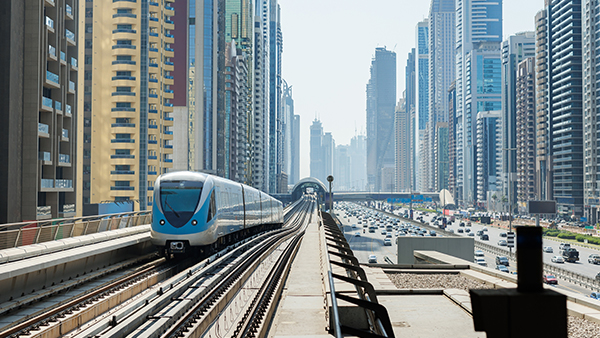
How the Dubai Metro Blue Line Could Influence Property Investment
Dubai’s real estate market has always moved alongside the city’s growth. As new neighborhoods, business districts, and transportation networks take shape, accessibility becomes an increasingly important part of deciding where to live and invest.
And the upcoming Dubai Metro Blue Line is set to add another major connection to Dubai’s transportation network.
With an investment of more than AED 20.5 billion, the project will span 30 kilometers and include 14 stations. It is scheduled to open on September 9, 2029, connecting with the existing Red and Green Metro Lines.
The route will serve Dubai Creek Harbour, Dubai Festival City, Ras Al Khor, International City, Dubai Silicon Oasis, Academic City, Mirdif, and Al Warqa. The communities along the route are expected to accommodate nearly one million residents by 2040, giving the project significance well beyond transportation.
For investors, the interesting question is what this new connection could mean for accessibility, demand, development, and property values.
How the Metro Expansion Connects to Real Estate
Think about what makes a location convenient. It is not just the property itself, but also how easily residents can go to work, university, shopping, entertainment, and other places they visit regularly.
That is where public transport infrastructure comes in. A metro station gives residents a time- and cost-effective alternative to private vehicles while connecting a neighborhood to a much wider part of the city.
The Blue Line also supports Transit-Oriented Development, or TOD. The idea is straightforward: bring homes, businesses, retail, education, and leisure closer to public transportation so that people can move between everyday destinations more easily.
For Dubai property investment, this public transport upgrade becomes an important part of assessing a location, alongside price, property quality, demand, and amenities.
How does the Blue Line Influence Property Prices?
The potential effect on property prices in Dubai is one of the biggest reasons investors are paying attention to the project.
The Roads and Transport Authority has estimated that the Blue Line could generate more than AED 56.5 billion in economic benefits by 2040 through shorter travel times, lower fuel consumption, fewer traffic-related costs, and other economic effects.
RTA also projected that land and property values around Blue Line stations could increase by up to 25%.
It is important to put that figure into context. The 25% is a projection, not a guaranteed increase for every property near the route. The actual result greatly depends on the individual property, its purchase price, demand, quality, amenities, and competing supply.
There is also a timing element.
Real estate markets react more to major infrastructure projects near completion. Investors may start reassessing a location when a route is announced, then continue watching it grow as construction progresses toward the 2029 opening.
For a closer look at the relationship between the Blue Line and Dubai’s property market, read Dubai Metro Blue Line and Real Estate: A Game Changer for Property Value.
Which Communities Could Benefit?
One of the most interesting things about the Blue Line is the variety of communities it connects. Each has a different role in Dubai’s real estate market.
Dubai Creek Harbour is a major waterfront development with residential, retail, leisure, and hospitality offerings. The planned station adds rail connectivity as the community continues to expand.
Dubai Festival City is already an established mixed-use destination, combining residential, commercial, retail, hospitality, and entertainment facilities. Metro access will add another transportation option to an area with an existing range of amenities.
Ras Al Khor is undergoing continuous development, while International City already has a large residential population. Better rail connections only strengthen its links with other parts of Dubai.
Dubai Silicon Oasis combines residential, commercial, educational, and technology-focused uses, giving it a strong connection to Dubai’s business and education sectors.
Academic City has a more specialized demand base, with universities and other educational institutions serving students, faculty, and staff. Convenient rail access could make regular journeys to the area easier.
Mirdif and Al Warqa are established residential communities where road transportation has traditionally been important. The Blue Line will introduce another accessible and cost-effective public transportation option for residents.
Because these communities are at different stages of development, investors should look at the particular characteristics of each location rather than treating the entire route as one market.
For a broader look at Dubai’s emerging metro-connected investment areas, read Upcoming Metro-Connected Communities for Real Estate Investments in Dubai.
What Makes a Property Truly “Near” the Blue Line?
When considering properties near Dubai Metro Blue Line, the word “near” needs to mean something practical.
A property in a Blue Line community may still require a car or taxi to reach the nearest station. A property within a comfortable walking distance offers a very different level of convenience.
Investors should check the actual walking time, pedestrian routes, sidewalks, road crossings, and access to the station entrance. These details determine whether residents will realistically use the metro as part of their daily routine, and eventually the property price.
The wider network matters, too.
Connections to the Red and Green Lines will also give Blue Line passengers access to more destinations across Dubai. It means more connectivity and convenience, which directly translates into financial returns.
What Could This Mean for Rental Demand?
For renters, commute is part of everyday life. A professional may want a convenient route to work, while a student may prioritize easy access to a university.
That supports interest in apartments near the Metro Blue Line, particularly among residents who regularly use public transportation.
The Blue Line is expected to carry around 200,000 daily passengers by 2030, with projected passengers reaching around 320,000 by 2040. These figures indicate the scale of use expected as the surrounding districts grow.
For landlords, passenger numbers are only part of the picture.
Rent, occupancy, building condition, layouts, amenities, and service charges also influence whether tenants choose one property over another. However, total moving volume in the corridor still influences rental returns, even if it’s by a small percentage.
Why the 2029 Timeline Matters for Off-Plan Buyers
The planned operational date is most relevant for off-plan property near the Metro Blue Line.
An off-plan development purchased during construction could be handed over closer to the metro’s planned opening. It gives buyers a timeline to compare expected property completion with infrastructure progress to assess potential rental demand or plan a move-in.
The surrounding community matters, too.
Roads, retail, schools, healthcare facilities, and recreational spaces all contribute to how functional a development will be when residents move in.
Investors should also check how many new residential units are expected to enter the market around the handover date.
A large number of new properties can increase competition between landlords and sellers. It can also increase the overall demand.
In such scenarios, the developer, payment plan, construction progress, service charges, and expected rental income become the differentiators, and therefore should be assessed alongside the metro timeline.
Why Interchange Stations Hold More Significance
The Blue Line is not being built as a standalone route. Its connection to Dubai’s existing metro system is one of its biggest advantages.
Interchange stations will allow passengers to seamlessly move between the Blue, Red, and Green Lines, enabling access to a much larger network of employment centers, universities, commercial districts, and other destinations.
For investors, this means greater passenger volume, more accessibility, and greater connectivity for their tenants.
What Should Investors Check Before Buying?
The Blue Line can strengthen the appeal of a location, but the property itself still needs to make sense as an investment.
Before buying, investors should check:
- Station proximity: Confirm the actual walking time and pedestrian route.
- Community amenities: Review schools, healthcare facilities, supermarkets, restaurants, retail, and recreation.
- Rental performance: Compare achievable rents, occupancy, and similar properties.
- Future supply: Review planned and under-construction residential projects.
- Property quality: Examine layouts, building condition, amenities, and maintenance.
- Ownership costs: Include service charges, transaction expenses, financing costs, and other recurring expenses.
- Development timeline: Compare the property’s completion date with major infrastructure milestones.
- Purchase price: Determine whether the asking price rightly factors in the expected Blue Line benefits.
The Blue Line and Dubai’s Long-Term Growth
The Blue Line fits into Dubai’s broader approach to urban development and mobility.
Its route brings residential communities, education hubs, technology districts, waterfront developments, and mixed-use areas into a more connected network.
The RTA projects that the project could reduce congestion along key corridors by around 20%. The line will also provide a direct metro connection to Dubai International Airport via the Red Line.
With the communities along the route expected to accommodate nearly one million residents by 2040, the project is designed to support a significant part of Dubai’s future growth.
For the overall real estate market, that makes the Blue Line relevant not just to individual properties, but to the way entire communities develop over time.
Final Words
The Dubai Metro Blue Line could become an important part of Dubai’s next phase of urban and real estate growth. Its 30-kilometer route, 14 stations, and connections to the existing metro network will bring several residential and development areas closer to the wider city.
For investors, the opportunity is in understanding what that improved connectivity means for a specific property. Consider station proximity, rental demand, future supply, property quality, ownership costs, and purchase price together.
And for anyone considering a Dubai property investment for personal use, the Blue Line offers a useful way to look ahead while keeping the focus on the fundamentals that make a property worth investing in.
Frequently Asked Questions
What is the Dubai Metro Blue Line?
The Dubai Metro Blue Line is a planned 30-kilometer metro route with 14 stations and an investment value of more than AED 20.5 billion. It is scheduled to open on September 9, 2029, and will connect with Dubai’s existing Red and Green Lines.
How could the Blue Line affect property prices in Dubai?
The RTA has projected that land and property values around Blue Line stations could increase by up to 25%. This is a projection, not a guaranteed increase. Actual property performance will depend on factors such as location, price, quality, demand, and supply.
Which areas will the Blue Line serve?
The route will serve Dubai Creek Harbour, Dubai Festival City, Ras Al Khor, International City, Dubai Silicon Oasis, Academic City, Mirdif, and Al Warqa.
What should investors look for in properties near the Blue Line?
Investors should check the actual walking distance to the station, pedestrian access, nearby amenities, rental performance, future supply, property quality, ownership costs, and purchase price.
Is off-plan property near the Blue Line worth considering?
An off-plan property near the Metro Blue Line can be worth considering when its expected completion fits the infrastructure timeline.
Investors should also assess the developer, payment plan, construction progress, service charges, expected rental income, and competing developments before making a purchase.