

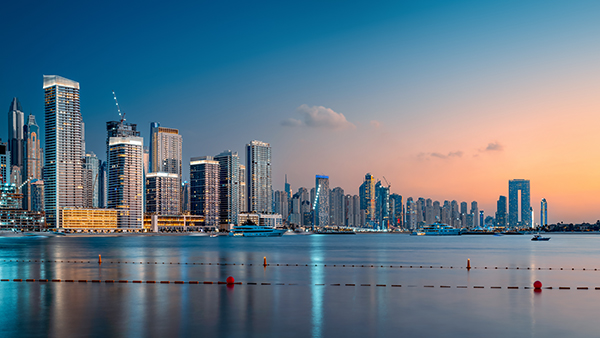
How Population Growth Impacts Property Prices in Dubai
As Dubai attracts residents from around the world, its growing population is reshaping the emirate’s residential landscape.
New arrivals, expanding households, and changing lifestyle preferences are influencing the types of homes needed across different communities.
For Dubai’s real estate market, population growth is a key demographic indicator.
Examining where new residents settle, what homes they seek, and how communities develop provides useful context for understanding property prices and market trends for informed property investment.
1. Migration and Changing Housing Preferences
International migration significantly contributes to Dubai’s population growth.
Professionals, entrepreneurs, business owners, and families move to the city for employment, business opportunities, and lifestyle.
Their housing requirements vary considerably depending on income, household size, workplace, preferred location, and lifestyle.
Some seek compact apartments near business districts, while families prioritize larger homes, schools, parks, and community facilities.
For more insight on this particular aspect, read How Demographic Shifts are Influencing Property Demand in Dubai.
2. Employment and Residential Choices
Employment opportunities across the UAE draw people closer.
As companies expand and new businesses launch operations, employment centers attract workers who need convenient housing.
Access to business districts, major roads, and public transportation heavily influences where residents choose to live.
Communities with convenient connections to major employment hubs appeal to residents seeking shorter commute times and easier access to work and everyday services.
For investors, employment and business activity provide additional context when evaluating Dubai real estate investment opportunities.
3. Rental Market Implications
Demographic changes influence rental activity because new residents enter the rental market before considering homeownership.
However, rental performance depends on more than just the number of potential tenants.
Property condition, unit size, location, amenities, available inventory, and affordability all affect occupancy and the rental yield.
Rental data therefore helps understand how demand develops within a particular community.
If you are more interested in the factors influencing rental demand, read Apartment Investment in Dubai: What Drives Rental Demand Today?
4. Infrastructure and Community Development
Population growth demands and encourages the development of the surrounding ecosystem and supporting services like supermarkets, restaurants, clinics, schools, fitness centres, and entertainment venues.
Over time, these additions directly contribute to the evolution of residential communities and make them more convenient for residents.
Danube Properties’ developments are positioned within Dubai’s evolving communities, where connectivity and access to everyday amenities form part of the broader residential experience.
For buyers and investors, understanding both existing and planned infrastructure provides useful context when evaluating individual locations and property prices in Dubai.
5. New Developments and Off-Plan Property
New developments and off-plan property in Dubai add housing supply while giving buyers access to newer layouts, amenities, payment structures, and emerging communities.
Danube Properties and several other developers across Dubai are developing projects designed around changing residential requirements, contributing to the expansion of housing options across the emirate.
Factors such as the developer’s track record, project location, payment plan, construction schedule, surrounding infrastructure, and competing developments remain important considerations when investing in property in Dubai.
New major projects can also influence how emerging communities develop as additional residential, retail, leisure, and service facilities are introduced around them.
For a closer look at the factors supporting off-plan properties, read The Resilience of Off-Plan Real Estate in Dubai Across Global Downturns.
Does Population Growth Always Increase Property Prices?
No, population growth does not automatically result in higher property values.
The relationship between population growth and property prices depends partly on how quickly housing supply responds to additional demand.
If sufficient homes are available, growing demand is naturally accommodated without creating a significant shortage.
Affordability is also paramount in how households respond to changing prices.
Residents tend to consider different property types, locations, or rental options when costs move beyond their preferred budgets.
This means population growth is best viewed as just one factor within a wider market context.
What Investors Should Assess
Population data is one piece of the puzzle for a comprehensive property assessment. Investors should also consider:
- Population and migration patterns
- Household composition
- Existing and planned housing supply
- Rental rates and occupancy
- Employment and business activity
- Transport connectivity
- Infrastructure development
- Community amenities
- Transaction activity
- Purchase and ownership costs
The significance of each factor depends on the property and investment goals.
For instance, a rental apartment should focus on occupancy rates, tenant demand, and accessibility, while a family property may prioritize schools, space, and community facilities.
A Long-Term Perspective
Population changes generally unfold over time and can shape the evolution of residential communities, infrastructure, and commercial activity.
Migration and employment opportunities impact where residents choose to live, while development activity determines how new demand is met.
Therefore, buyers and investors should view demographic growth alongside housing supply, economic conditions, rental performance, and local development to completely understand Dubai’s real estate investment market.
FAQs
How does population growth affect property prices in Dubai?
Population growth increases housing requirements as more residents need accommodation.
However, the demand and its impact on prices depend on supply, affordability, location, infrastructure, and wider economic conditions.
Does migration increase demand for property in Dubai?
Migration contributes to housing demand as new residents require accommodation. However, the resulting demand is different and depends on household size, income, employment location, and preferred property type.
What role does infrastructure play in property values?
Infrastructure enables convenience and affects accessibility to workplaces, schools, healthcare, transport, retail, and other facilities. Moreover, infrastructure improvements enhance the overall attractiveness of individual communities.
Which areas of Dubai are most affected by population growth?
The impact varies between communities depending on housing supply, employment opportunities, transport connectivity, infrastructure, and the pace of new development.
Areas experiencing population growth alongside expanding amenities and employment opportunities tend to see a surge in housing demand. However, this is just one of the many market conditions that remain equally important.
How can investors use population trends when evaluating Dubai real estate?
Population and migration data offer insight into changing housing requirements.
They do not tell the entire story. But investors can combine this information with rental performance, residential supply, employment activity, infrastructure, and community trends when assessing a property.