Global markets thrive on one thing: change.
Inflation rises, interest rates fluctuate, supply chains tighten, and geopolitical shifts reshape investment decisions almost overnight.
Yet while uncertainty slows property markets across the world, Dubai’s real estate market has repeatedly demonstrated an unusual ability to adapt and recover.
This resilience is the result of long-term planning, progressive regulations, population growth, infrastructure investment, and a development model that continues to evolve with changing market conditions.
More importantly, the off-plan segment has become one of the strongest indicators of this resilience, attracting investors who prioritize long-term appreciation over short-term market noise.
As global investors look for markets that combine stability with growth potential, the conversation increasingly turns toward one destination: Dubai.
Global Uncertainty has Changed Investor Priorities
Mature economies experience prolonged slowdowns because of limited housing supply flexibility, high borrowing costs, or restrictive regulations.
Investors today are looking beyond traditional markets for locations that offer stronger fundamentals and greater long-term visibility.
The UAE has steadily positioned itself as one of those destinations.
With a diversified economy, business-friendly policies, tax efficiency, world-class infrastructure, and stability, the country has created an environment where real estate remains an attractive long-term asset.
Beyond domestic demand, stronger diplomatic ties across the GCC have also widened the investor base.
As a result, industry estimates suggest that these factors have contributed to 5-7% year-on-year growth in off-plan transaction volumes, alongside broader economic reforms and increasing investor confidence.
Within this ecosystem, Dubai continues to stand out because of its ability to attract both capital and people simultaneously.
And because of this, Dubai real estate values become far more sustainable when population growth supports demand instead of speculation alone.
Read How Government Reforms Strengthened the UAE’s Real Estate After Past Crises for a deeper look at the regulatory changes behind this evolution.
Population Growth is Absorbing New Supply faster than Expected
One of the most misunderstood aspects of Dubai’s real estate is the conversation around supply.
Every new project announcement raises the same question: Is there too much inventory?
The numbers suggest otherwise.
Dubai’s population has crossed 4.7 million residents, continuing one of the fastest urban growth trajectories globally, driven by professionals, entrepreneurs, investors, remote workers, and high-net-worth individuals relocating to the emirate.
At the same time, employment growth, business formation, and long-term residency initiatives continue bringing new residents into the market.
Programs like the Golden Visa and expanded residency pathways have fundamentally shifted demand from short-term occupancy toward long-term homeownership.
More recently, the UAE introduced greater flexibility by removing the AED 750,000 threshold for residency based on property ownership.
Sole owners of property valued at any price in Dubai automatically qualify for the 2-year residency visa, while joint owners are required to hold a share of AED 400,000 each.
Instead of creating oversupply, new residential launches are increasingly being absorbed by a larger resident and global first-time-investor base.
The demand and these pathways are particularly noticeable in off-plan apartments in Dubai, where buyers secure properties years before completion, enabling developers to match future housing demand effectively.
Smarter Banking Regulations Making Ownership More Accessible
Affordability and accessibility are now defined by access to financing more than income.
Over the past several years, the UAE banking sector has introduced stronger lending frameworks while maintaining prudent mortgage regulations by 0.25 and 0.5%.
Combined with oversight from the Central Bank of the UAE and the Dubai Land Department’s escrow protections, buyers today enter a far more transparent ecosystem than they would have encountered a decade ago.
Danube Properties was one of the pioneers of it. Our flexible payment structures, the 0.5 and 1% payment plans, have transformed how people buy apartments in Dubai on installments, significantly reducing the financial burden of traditional property purchases.
Instead of requiring complete upfront funding, many of our projects distribute payments across construction milestones and even after handover.
For many buyers, this changes the investment equation entirely. Rather than waiting years to accumulate full capital, they can enter the market earlier while benefiting from capital appreciation during construction.
Launch Strategies Have Become Far More Disciplined
Another reason the off-plan segment has remained resilient is how developers approach new launches. The market has matured considerably.
More than demand, launches by leading developers are increasingly backed by market research, phased releases, pricing strategies, infrastructure readiness, and buyer segmentation.
Projects today are introduced in carefully planned phases, allowing developers to respond to actual absorption rates before releasing additional inventory.
This disciplined approach benefits everyone.
Developers reduce unnecessary market pressure, buyers gain confidence in project viability, and investors experience healthier long-term appreciation rather than excessive volatility.
Danube Properties, known for combining affordable luxury with structured payment plans, reflects how developer-led innovation can broaden access, and it has been a key component in our developments, being a massive success.
Off-Plan Continues to Outperform During Changing Market Cycles
Historically, periods of economic uncertainty create opportunities for long-term investors.
During slower market phases, developers introduce attractive launch prices, extended payment plans, and value-added incentives. Investors entering during these windows benefit from appreciation as projects approach completion and broader market confidence returns.
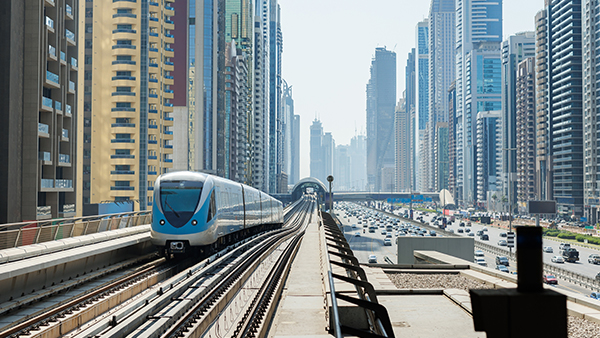
Supported by broader economic strength across the UAE, projects such as metro extensions, road upgrades, and airport expansion enhance the desirability of surrounding communities, with properties near these major infrastructure projects seeing 6-10% appreciation in value over time.
This is one reason why off-plan apartments in Dubai continue to attract international buyers despite changing global conditions.
The market offers something many mature cities struggle to replicate: new inventory supported by expanding infrastructure, population growth, and continuous economic diversification.
According to the Dubai Land Department, off-plan transactions have represented a significant share of total residential sales in recent years, reflecting sustained confidence among local and international investors alike.
To learn more from a financial perspective, read Off-Plan vs Ready Apartments in Dubai: Pros and Cons for Investors.
Looking Beyond Market Cycles
Dubai’s off-plan sector has demonstrated that resilience emerges from progressive regulations, disciplined launch strategies, infrastructure investment, transparent governance, and a development ecosystem that continues to evolve with investor expectations.
Whether the goal is capital appreciation, rental income, or portfolio diversification, off-plan apartments in Dubai continue to offer opportunities that align with broader economic fundamentals.
For those planning to buy an apartment in Dubai on installments, or simply exploring the right time to buy property in Dubai, resilience has become one of the city’s defining competitive advantages.
In a market built on resilience, choosing the right project and the right developer can make all the difference.
And as one of the developers shaping this evolving landscape, Danube Properties continues to make homeownership more accessible through thoughtfully designed communities, strategic locations, and flexible payment plans that align with buyers.