

Dubai Real Estate Demand Rises as UK Buyers Look Abroad
The global property landscape is shifting, and Dubai’s real estate has emerged as one of the most fascinating markets for international capital.
What was once a regional luxury market has become a global magnet for foreign investors.
British buyers are rewriting the playbook on where overseas capital will be in 2026 and beyond.
It is backed by data, demographic movement, and macroeconomic forces that no property investor can ignore.
Let’s unpack what’s driving this momentum, how British interest in Dubai’s market is reshaping demand curves, and why forward-looking investors, whether seasoned players or new entrants, are tuning into this surge.
1. Market Scaling at Speed
Dubai closed 2025 with AED 682.49 billion in total real estate transactions, according to Dubai Land Department data reported by Gulf News, representing a 30.4% increase over 2024.
Transaction growth at that scale signals liquidity depth, absorption strength, active secondary market participation, and sustained investor appetite.
At the same time, the rental performance remained strong.
Engel & Völkers reports gross rental yields between 5% and 8%, with select mid-market communities reaching up to 9%.
Connecting these two metrics: High transaction velocity + strong rental yields = capital that moves and performs.
Capital flows where risk-adjusted returns justify exposure.
Yield compression in Europe and the UK contrasts sharply with Dubai’s spread advantage. For global investors comparing mature Western markets yielding 2-4%, this differential shifts portfolio mathematics to Dubai’s real estate.
More on the above: Why Global Investors Are Choosing Dubai Real Estate in 2026
2. Foreign Ownership Signals Global Confidence
Primo Capital’s 2025 Dubai Real Estate Report indicates that foreign investors now account for over 40% of residential ownership in Dubai, a remarkable indicator of global confidence in the market.
Among those investors, British buyers represent roughly 17% of all foreign purchases in 2025, ranking second after Indian investors.
This percentage in a globally competitive investor base signals concentration of conviction and demonstrates three structural realities:
- Dubai has entered mainstream global portfolio allocation.
- Western capital is diversifying outside traditional European hubs.
- Demand composition is broadening rather than narrowing.
Diversification stabilizes markets and investor capital. When multiple geographies feed demand, reliance on a single capital source declines. That strengthens market resilience.
But Why is the UK Capital Redirecting
British investor interest carries specific weight because the UK has historically deployed capital domestically or within Europe.
That allocation pattern is shifting, and the reasons are below.
1. Currency Advantage
The British pound’s relative strength against the UAE dirham in 2025 improved purchasing power for UK buyers. Currency arbitrage amplifies yield advantages.
Who wouldn’t want that?
Reuters reported a 62% year-over-year increase in British property investment in Dubai during Q2 2025.
This surge reflects accelerated deployment and the fact that when currency efficiency combines with higher rental yields, portfolio returns compound faster.
For UK investors facing tightening margins at home, this equation drives decision-making.
2. Tax Structure and Return Retention
The UK’s property landscape includes capital gains tax, inheritance tax, and stamp duties, which reduce net returns.
Dubai’s tax framework enhances return retention. Rental income is not taxed. Capital gains are not eroded. Now connect this with yield data: 6-9% gross yields in Dubai without income tax.
That’s significantly stronger net outcomes compared to the 3-4% taxed yields in London.
3. Residency and a Premium Lifestyle
Investment in Dubai increasingly overlaps with lifestyle.
Long-term residency options, such as the UAE Golden Visa, promise stability. For UK investors willing to lock in their capital, residency offers a lavish lifestyle in one of the most prominent cities.
Dubai is at the epitome of Infrastructure, safety rankings, global connectivity, and cosmopolitan living, which further support relocation.
When lifestyle incentives align with financial performance, property transforms from a passive asset into a dual-purpose instrument: income and optionality.
That alignment has also accelerated buying decisions, particularly in our master-planned communities, making Danube Properties the go-to option for the best developers in Dubai.
More on property and living: Dubai vs. London: Why Investors Are Preferring Dubai
Net Result: Demand Diversification Strengthens the Ecosystem
Dubai’s earlier growth cycles leaned heavily on specific regional capital pools. The current cycle reflects broader international depth.
Indian, Chinese, British, Russian, GCC, and European buyers all contribute to meaningful participation in the Dubai real estate market.
This multi-origin demand base reduces volatility and enhances absorption rates across price segments. That’s security for investors.
Transaction data also confirms that both primary and secondary markets remain active. This liquidity in the resale segment allows investors exit flexibility, a key consideration for global portfolios.
While these benefits favor all investors, English investors have begun capitalizing on this offer early on.
Expert insights: Dubai Property Market 2026: Why Experts Say This Is a Buyer’s Market
Diving Deep: Property Preferences
British investors are intentional in property purchases.
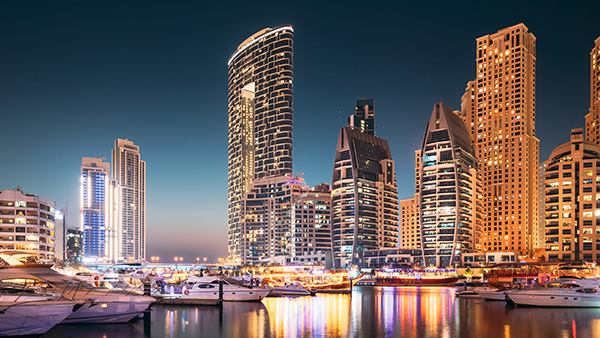
Waterfront, branded, and centrally located properties dominate preference patterns. And communities such as Palm Jumeirah, Downtown Dubai, and Dubai Marina continue attracting English buyers.
Developers responding to this shift are focusing on lifestyle-driven amenities, flexibility with payment plans, and community infrastructure integration.
Projects aligned with international buyer expectations experience faster absorption and stronger resale performance, a pattern consistently demonstrated by Danube’s Properties.
End Result: Investor Takeaways
For portfolio builders evaluating allocation shifts, the data implies several strategic takeaways:
1. Yield Spread Advantage Remains Intact
Grossing annually at 5-9%, Dubai’s rental yields maintain a meaningful gap over London and major European cities.
As long as that spread persists, capital reallocation will continue.
2. Liquid Market Enhances Exit Confidence
High transaction volumes support resale flexibility. Investors prioritize such markets where asset turnover is efficient. That’s why money is moving from London to Dubai.
3. Policies Support Stability
Clear foreign ownership rules and long-term residency pathways reduce regulatory uncertainty, a critical variable in international investing.
Again, professional guidance from a well-renowned real estate company in Dubai, like Danube, or legal firms, ensures investors remain aligned with evolving policy frameworks.
4. Product Selection Drives Performance
Location, developer reputation, and brand association influence long-term appreciation and rental strength.
Institutional-grade planning and globally aligned developments are likely to outperform generic supply. That’s a strong reason why many international buyers prioritize projects delivered by a recognized developer in Dubai.
Final Perspective
The rise in British participation is part of a larger capital migration pattern.
Investors are reassessing traditional Western strongholds and seeking markets offering stronger net returns, policy clarity, and global connectivity.
Dubai’s 30% transaction growth, 5-9% rental yields, 40% foreign ownership share, and 62% spike in British quarterly investment collectively illustrate more than momentum.
Capital reallocates when comparative advantage becomes obvious.
And in 2026, Dubai stands at the intersection of yield, liquidity, demographic expansion, and regulatory stability.