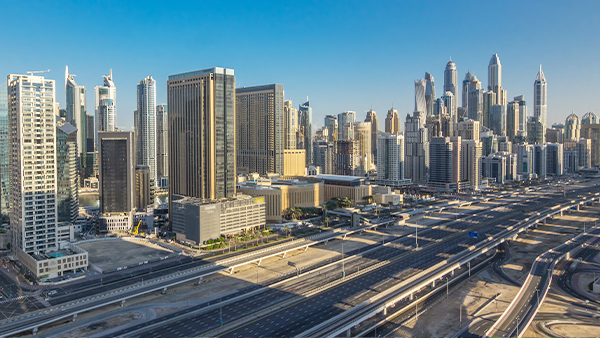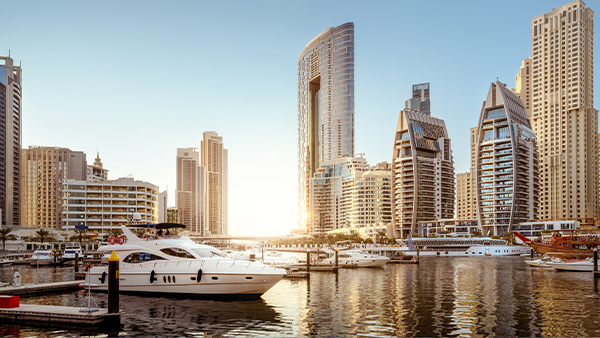
Global capital flows where numbers make sense, risk is manageable, and the ecosystem rewards patience.
Yet there is one market that global investors repeatedly return to after every correction, slowdown, or period of uncertainty. And that is Dubai’s real estate market.
Across multiple cycles, from the aftermath of the Global Financial Crisis to the economic disruption of the COVID‑19 Pandemic, the pattern has been remarkably consistent.
Prices may pause, but when speculations fade, capital returns stronger than before.
There are several structural reasons behind this resilience.
In this article, we will explore the seven reasons why Dubai’s property investments continue to attract entrepreneurs, family offices, and institutional investors from all over the world.
1. A Market With No Personal Income Tax
One of the most fundamental drivers is the region’s fiscal structure.
Investors entering the market quickly recognize the tax-free property investment in Dubai as a genuine structural advantage.
Rental income generated from property ownership in the UAE remains untaxed at the personal level. For investors accustomed to markets where rental yields are heavily reduced by taxation, this dramatically changes the equation.
Rental income in many Western markets faces combined tax rates exceeding 30-40%. In contrast, rental income generated from property investment in Dubai flows directly to the investor.
This fiscal framework has become one of the primary reasons why HNI investment in UAE property has grown steadily in the past decade.
According to data from Time Homes Real Estate, foreign investors now hold more than 40% of residential property ownership in Dubai, a proportion that surpasses the level of international ownership seen in many major global cities.
2. Unmatched ROI in a Global Context
While lifestyle headlines dominate the conversation, serious investors focus on return metrics.
Rental yields in Dubai consistently outperform many mature markets.
According to research, average gross rental yields in Dubai range between 5-8%, depending on the district and property type.
In comparison, yields in cities such as London or New York fall closer to 2-4%.
Capital appreciation has also played a significant role.
According to the Dubai Land Department, property transactions in Dubai reached AED 917 billion in 2025, the highest value ever recorded in the city’s real estate market.
For global investors, the equation becomes compelling:
- Strong rental yields
- No tax on personal income
- Continuous international demand
- Transparent ownership framework
This combination explains why many investors choose to invest in Dubai real estate even during global economic uncertainty.
Read more: Alternate Investment Opportunities for US Expats: Why Dubai Real Estate is Your Safe Haven
3. Luxury That Functions as Infrastructure
The skyline, supercars, and beachfront penthouses in Dubai are the visible layer of “luxury,” but the true advantage lies beneath the glamour.
Infrastructure development in the UAE has been systematic and long-term. Projects continue to reshape mobility, logistics, and urban planning across the city.
The expansion of the Dubai Metro is a major example. The upcoming Blue Line alone is expected to serve hundreds of thousands of additional residents and connect emerging districts to key commercial zones.
Similarly, major aviation hubs such as Dubai International Airport and Al Maktoum International Airport anchor the city’s role as a global transit hub. Together, they position Dubai as one of the most connected cities in the world.
For investors looking to buy a house in Dubai, infrastructure growth in the city is a significant demand driver.
Properties located near metro stations, business districts, and logistics corridors historically show stronger long-term appreciation and rental stability.
4. Flexible Payment Plans Reshaping Accessibility
Another reason global investors continue to enter the market is the financing structure offered by developers.
Unlike traditional markets where buyers must secure large upfront financing, many developers in Dubai’s property investment market offer structured payment plans that extend well beyond construction timelines.
These flexible payment plans allow buyers to distribute payments over several years, reducing initial capital requirements while maintaining exposure to the asset.
This model has significantly expanded access to the market, allowing a broader segment of global investors to invest in Dubai’s real estate without heavy upfront leverage.
Developers such as Danube Properties have been at the forefront in introducing structured installment models like our signature 1% payment plan.
Such models make premium developments accessible to a wider investor base while maintaining strong design standards and strategic urban locations.
For investors planning to finance their purchase, it’s worth understanding the lending framework in detail. For more information, read UAE Mortgage Rules: How to Secure Property in Dubai.
5. Residency Incentives that Reinforce Investment
Real estate investment in the UAE is also closely linked to residency opportunities.
The UAE Golden Visa has become a major draw for international investors.
Property owners meeting investment thresholds of 2 million dirhams can qualify for 10-year residency, offering stability for entrepreneurs and families seeking a global base.
At a more accessible entry level, property investors can qualify for renewable 2-year residency visas with a minimum real estate investment of AED 750,000, enabling them to live, work, and conduct business within the country.
These residency pathways reinforce the logic behind HNI investment in UAE property.
While the asset generates returns and anchors long-term mobility, it also allows individuals access to one of the world’s most globally connected regions.
Read more: UAE Golden Visa Advantages: Why HNWIs and global investors choose Dubai
6. Transparency that Builds Investor Confidence
Historically, one of the main barriers for global property investors has been legal transparency.
Dubai addressed this challenge early. The introduction of escrow regulations, project registration requirements, and centralized transaction monitoring has dramatically increased investor confidence.
The Dubai Land Department maintains detailed transaction records and enforces developer escrow systems designed to protect buyer funds during construction.
This level of transparency is one reason international investors feel comfortable allocating significant capital to property investment in Dubai.
In many ways, the regulatory evolution of the UAE real estate market has turned the city into one of the most structured property investment ecosystems in emerging markets.
7. New Technology that Opened the Market Even Further
One of the newest developments attracting global capital is real estate tokenization.
Tokenization allows property ownership to be divided into digital shares recorded on blockchain infrastructure.
This technology enables fractional ownership, allowing individuals to invest in premium assets without purchasing the entire property.
Dubai has actively explored tokenization initiatives as part of its broader digital economy strategy.
As blockchain infrastructure matures, this model could significantly expand access to property investment in Dubai, especially for residents and international investors seeking diversified exposure without direct property management.
To learn more, explore Real Estate Tokenization in UAE: Can You Invest with Crypto?
Why Investors From Around the World Continue to Choose Dubai
Global investment flows into the UAE from a wide range of regions, namely India, the UK, Russia, China, and the Middle East itself.
Investors from countries experiencing economic volatility or sanctions have also explored property markets abroad as a way to diversify capital.
Even in the face of geopolitical uncertainty, global capital has shown a tendency to return to stable, structured markets.
Despite the ongoing tensions and volatility, analysts note that Dubai’s property market has historically recovered quickly from regional shocks, supported by strong demand and infrastructure growth.
The city’s ability to combine lifestyle advantages with measurable financial performance continues to attract capital from entrepreneurs, expatriates, and institutional investors alike.
For a deeper look at the economic, regulatory, and lifestyle factors shaping global investor decisions in Dubai, read Why Global Investors are Choosing Dubai Real Estate in 2026.
Final Word
Every real estate market experiences cycles. Slowdowns happen, and corrections occur.
But the pattern with Dubai’s property investment remains strikingly consistent: when uncertainty fades, capital flows back.
The reasons are structural:
- Tax-free property investment in Dubai
- Competitive rental yields
- Continuous infrastructure development
- Flexible developer payment structures
- Residency incentives like the Golden Visa
- High regulatory transparency
These factors create an ecosystem that many investors view as exceptionally resilient.
Danube Properties has built its strategy around this long-term demand by focusing on affordability, structured payment plans, and developments aligned with the city’s expanding infrastructure.
For global investors seeking stability, mobility, and long-term returns, the equation remains clear.
When the dust settles, the same question reappears: where does smart money go next?
And more often than not, the answer leads back to Dubai.