There’s a noticeable difference between investors who participate in real estate and those who structure it.
The former react to cycles while the latter builds through them.
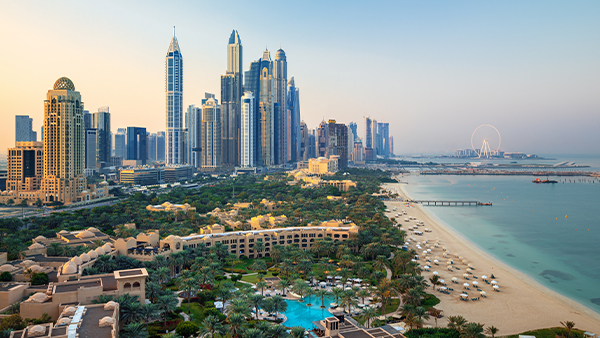
That distinction is exactly where the modern HNI property strategy in the UAE begins to take shape, especially in a market like Dubai.
Over the past two decades, Dubai has evolved into a market where this level of strategic investing is increasingly necessary.
Estate decisions are being aligned with long-term objectives, backed by data, structure, and clarity. They are now grounded in disciplined allocation, regulatory strength, and reinforced by a market that has matured through experience.
Dubai: A Market Defined by Evolution
The transformation of Dubai’s real estate sector is best understood through its response to global disruptions.
During the 2008 financial crisis, the market experienced a sharp correction, with price declines reaching nearly 50% in some segments.
This phase led to the introduction of escrow regulations, tighter oversight of developers, and structured project financing, laying the foundation for a more transparent ecosystem.
In 2020, global uncertainty returned in a different form.
The pandemic affected liquidity and mobility, yet the recovery trajectory was notably faster. Policy agility, digital adoption, and international investor participation accelerated market activity.
By 2025, annual real estate transactions in Dubai crossed AED 917 billion, reflecting sustained investor confidence.
The luxury segment recorded over 500 transactions above $10 million, positioning the city among the world’s leading ultra-prime markets, including 68 homes worth more than $25 million.
This progression has shaped a market where property investment in Dubai is now viewed through a long-term, institutional lens.
Structural Drivers Behind Sustained Demand
Several underlying factors continue to support demand across segments of property in Dubai:
As of March 2026, the UAE’s population touched 11.57 million, with the emirate’s population exceeding 4.47 million in 2025, driven by business expansion and skilled migration.
Projects aligned with the Dubai 2040 Urban Master Plan continue to enhance connectivity and urban planning.
Long-term residency programs and the Golden Visa have strengthened end-user demand, and the city has established itself as a global hub for premium real estate, attracting international capital.
Even within the broader geopolitical landscape following the current escalation, Dubai’s positioning as a stable economic hub continues to influence capital flow.
It’s because Dubai’s market chases long-term value over market cycles. To understand this, read What Makes a Dubai Property Truly ‘Future-Proof’ for Investors.
The UAE Advantage
The country’s GDP plays a very important role in real estate conversations, serving as the macro layer supporting it.
The UAE economy itself has been expanding consistently.
In 2025, the nominal GDP reached $569.1 billion with strong per capita income levels and high global rankings, and is now estimated at around $601.2 billion in 2026.
More importantly, growth is no longer oil-dependent.
- The non-oil sector contributes over 73% of GDP
- Economic expansion is being driven by finance, tourism, construction, and real estate
- GDP growth is projected to be around 5% for 2025-2026
- Population growth continues to be driven by expatriate inflows, which directly support housing demand
There is also a structural shift underway.
UAE Economic Comparison: 2024 vs 2025 vs 2026
| Indicator | 2024 | 2025 | 2026 (Forecast) |
|---|---|---|---|
| Real GDP Growth | 4.8% | 5% | 6% |
| Non-Oil GDP Growth | 4.6% | 6.1% | 4.8% (post current situations) |
| Oil Sector Growth | 5.3% | 6.3% | 7% |
| Economic Drivers | Trade, tourism, real estate, logistics | Strong non-oil expansion + oil output recovery | Full-cycle growth across oil + non-oil sectors |
| Economic Positioning | Stable post-pandemic expansion | Accelerated growth phase | Peak diversification + expansion cycle |
The UAE’s economic strategy is focused on long-term capital inflow, diversification, and private sector expansion, supported by initiatives like the National Investment Strategy 2031.
That context matters because property in Dubai reflects the direction of the broader economy.
A Structured Framework for HNIs
A consistent approach to real estate allocation begins with a clearly defined framework. The following steps reflect how experienced investors structure their portfolios within the UAE market.
Step 1: Define Investment Goals
For a market as dynamic as Dubai’s real estate, clarity of intent shapes asset selection.
Investment goals may include income generation, capital appreciation, or long-term wealth preservation.
Each objective corresponds to a different category of property investment in Dubai, ranging from rental-focused apartments to high-value branded residences.
Step 2: Assess Risk Tolerance
In real estate, risk is categorized across multiple dimensions:
- Market risk: exposure to price fluctuations
- Liquidity risk: ease of resale or leasing
- Financial risk: leverage and cash flow considerations
- Regulatory risk: evolving policies related to ownership and tenancy
A clear understanding of these factors supports effective capital preservation for HNIs, particularly in dynamic market conditions.
Step 3: Allocate Capital Strategically
Strategic allocation ensures balance.
Rather than concentrating capital in a single segment, investors distribute across multiple asset types.
This approach supports the creation of a diversified real estate portfolio to balance stability with growth potential.
Step 4: Conduct Macro and Micro Market Analysis
Market analysis operates at two levels.
At the macro level, factors such as population growth, economic diversification, and infrastructure investment shape overall demand, which are well in favor of Dubai’s real estate market.
At the micro level, location-specific indicators like rental yields, tenant demographics, and accessibility determine asset performance. This may help investors differentiate property types for personal investment goals.
This layered analysis helps identify opportunities where property investment in Dubai aligns with both current demand and future growth.
Step 5: Assess Developer and Asset Quality
Developer credibility plays a central role in investment outcomes.
Key considerations include:
- Track record of project delivery
- Construction quality and materials
- Efficiency of property management
- Occupancy rates and tenant feedback
Danube Properties offers a value-oriented approach, combining accessible pricing and features that support long-term demand, with consistent delivery standards, making it an investor favorite over the last decade.
Step 6: Analyze Supply and Demand
Supply-demand dynamics directly influence returns.
Balanced markets tend to support rental stability and capital appreciation.
Emerging areas may offer strong growth potential, particularly when infrastructure development aligns with population expansion.
Step 7: Define Exit Strategies
Exit planning is an integral component of investment structuring.
Options may include capitalizing on market cycles, transitioning assets into rental income streams, or reallocating capital within the portfolio.
This ensures that each property investment in Dubai aligns with a broader financial strategy and personal wealth management goals.
Step 8: Monitor and Adjust
For any market, continuous monitoring is essential and supports long-term alignment.
Change is constant. And tracking changes in rental performance, infrastructure developments, and regulatory updates enables timely adjustments.
This approach maintains portfolio relevance within evolving market conditions.
Step 9: Portfolio Integration
Real estate functions as part of a larger wealth structure. Integrating it with other asset classes enhances overall portfolio resilience.
Within diversified portfolios, property investment in Dubai is used as a combination of income generation and asset-backed stability.
Step 10: Maintain Discipline
Consistency remains a defining factor.
Mohamed Alabbar, founder of Emaar, consistently emphasized that real estate success is built on long-term thinking rather than short-term gains.
Dubai’s regulatory framework and long-term vision reinforce confidence in the same direction.
For an insightful approach to structuring returns, read How to Build a Profitable Real Estate Portfolio in Dubai in 2026.
Dubai’s Position in Global HNI Portfolios
The inclusion of property in Dubai within HNI portfolios reflects a combination of financial and structural advantages:
- Tax efficiency: absence of property and income tax
- Rental yields: averaging 6-10% in prime locations
- Currency stability: AED’s peg to the US dollar
- Global connectivity: a central hub linking major international markets
These factors contribute to the sustained appeal of acquiring a house for sale in Dubai, particularly among international investors seeking good deals and long-term allocation.
Real Estate Investment in Dubai: A Strategic Leverage
Strategic real estate investment is defined by structure, consistency, and alignment with long-term objectives.
Dubai’s market has evolved through regulatory reform, infrastructure expansion, and global integration. This progression has created an environment where disciplined frameworks guide decision-making across cycles.
The application of a structured HNI property strategy in the UAE is supported by diversification, quality asset selection, and continuous portfolio alignment, positioning real estate as a residence-leverage and a central component of long-term wealth management.
Within this framework, property investment in Dubai continues to offer stability, scalability, and global relevance, reinforcing its role in sophisticated investment portfolios.