Investors across global markets now prioritize assets that deliver consistent returns, preserve capital, and support long-term wealth creation.
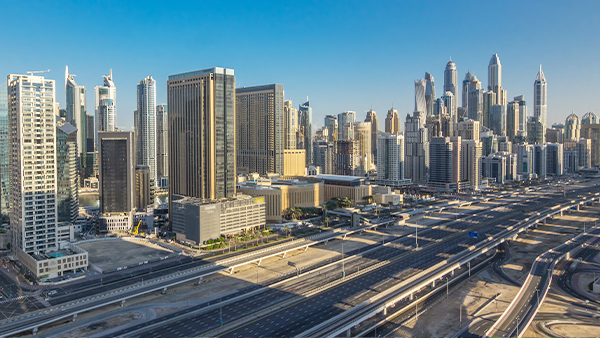
Among these opportunities, apartments in Dubai continue to stand out as one of the most reliable and scalable income-generating assets in the international property landscape.
It’s driven by population growth, economic expansion, and strong regulatory frameworks that have evolved Dubai into a structured, transparent, and performance-driven real estate market.
In a nutshell, for investors seeking reliable rental income, one-bedroom apartments in Dubai offer a compelling combination of yield, demand, and affordable real estate.
How Apartments Support Sustainable Passive Income in Dubai
Dubai’s residential market benefits from strong fundamentals that support long-term rental performance.
Analyzing DLD data, Bayut reports 630,000+ rental transactions in the last 12 months. The data also highlights an 8.5% increase in average annual rent and a 10% increase in average rental rate per sq. ft., signaling a steady growth in Dubai’s real estate rental transactions.
As per Dubai Estate and Engel & Völkers, average gross yields range from 6% to 8%, with select locations delivering yields as high as 9.36%.
These figures position Dubai among the world’s most yield-efficient residential investment destinations and continue to attract investors to purchase property.
One-Bedroom Apartments Lead Rental Demand
Market data consistently confirms that 1-bedroom apartments in Dubai remain the strongest performers in the rental ecosystem.
Apartment search data from Taranis Capital shows that 85% of tenant interest was focused on studio, one-bedroom, and two-bedroom units in 2025, highlighting a strong preference for compact, cost-efficient, and functional residential options among today’s home seekers.
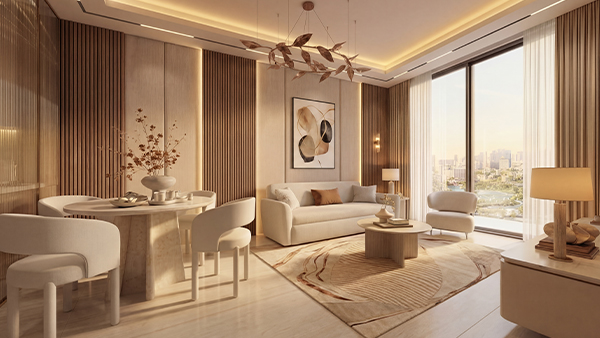
These properties, especially 1-bedroom apartments in Dubai, align closely with the lifestyle preferences of professionals, entrepreneurs, and remote workers without straining their budget.
Paired with modern layouts, strategic locations, and integrated amenities, they further enhance long-term occupancy and rental stability.
As a result, one-bedroom apartments in Dubai continue to generate dependable rental income across multiple market cycles.
If you would like to compare returns across unit types, read Studios vs. 1-Bed vs. 2-Bed vs. 3-Bed: Which Property Delivers the Best ROI in Dubai?
Having said that, we can devise 4 strategies to use rental yield as stable passive income.
Strategy 1: Long-Term Leasing for Consistent Cash Flow
Long-term leasing remains the foundation of stable passive income.
A well-located 1-bedroom apartment in Dubai generates an annual rent of AED 70,000 – 90,000 as per Dubai Beat.
After standard operating costs, investors achieve net yields between 5% and 7%.
High-performing locations include:
- Business Bay
- Dubai Marina
- Jumeirah Village Circle
- Jumeirah Lake Towers
- Arjan
- Dubai Silicon Oasis
These areas maintain strong tenant demand throughout the year.
Strategy 2: Short-Term Rentals for Enhanced Yield
Short-term leasing has matured into a structured, regulated segment within Dubai’s property ecosystem.
Ein Presswire reported that licensed holiday homes exceeded 22,000 units in September 2025, reflecting a year-on-year growth rate of 35%, catering to tourists, corporate visitors, and families traveling across the city.
Industry data from Airbtics shows that a professionally managed one-bedroom unit can generate:
- Average monthly revenue of 13,035 Dh.
- Average Airbnb occupancy rates of 72%
- Daily rates ranging from AED 350 to AED 600
When planned and executed strategically, short-term rentals enable higher revenue potential.
Moreover, this model performs really well in areas with high connectivity, tourism activity, and business infrastructure.
Strategy 3: Off-Plan Investment with Rental Integration
Off-plan investment represents a strategic pathway to capital appreciation and rental income.
According to an Off-Plan Market Report from Haus and Haus, new developer launches and off-plan resale transactions represented 73% of all residential deals in 2025, with a combined value of AED 395.3 billion. Reflecting on growth, that’s a massive 31.4% year-on-year growth.
Many off-plan apartments in Dubai launch at competitive entry prices and appreciate by the time of project handover.
For example:
- Initial purchase: AED 650,000
- Post-handover valuation: AED 800,000+
- Annual rent: AED 70,000+
Danube Properties has designed thoughtful payment structures, including our post-handover payment plan to support rental viability. These models enable investors to generate income while paying the property value in installments.
Strategy 4: Portfolio Expansion Through Equity Optimization
Dubai’s mortgage ecosystem supports structured portfolio growth.
According to Central Bank-aligned mortgage guidelines in the UAE cited by Arab Land, expatriate homebuyers can access loan-to-value ratios up to 75% for their first property, with slightly lower ratios (70%) applied for larger or subsequent purchases.
This framework enables investors to expand gradually through refinancing and equity utilization, offering strong leverage for those interested in rental-oriented assets, like apartments in Dubai.
A typical growth pathway includes:
- Acquiring a primary income-generating unit
- Stabilizing rental income
- Refinancing after appreciation
- Deploying equity for additional investments
This structured approach supports long-term portfolio scalability.
To learn how to scale beyond a single property in Dubai’s dynamic real estate market, read: How to Build a Profitable Real Estate Portfolio in Dubai in 2026.
Regulatory Strength and Market Transparency
Dubai’s real estate market operates under a robust governance system that enhances investor confidence.
Key regulatory features include:
- Ejari rental registration
- RERA rental benchmarks
- Escrow account protections
- Digital title deed systems
- Specialized property dispute tribunals
According to the 2024 Global Real Estate Transparency Index by JLL featured in Zawya, Dubai ranked 28th worldwide for real estate market transparency and was placed among the top 5 global improvers.
This makes Dubai’s property market the only transparent real estate market across the entire MENA region, underlining the UAE’s strong, efficient property ecosystem that supports effective real estate transactions and reinforces Dubai’s reputation as a secure investment environment.
Danube Properties and Investor-Oriented Development
Danube Properties has established a strong presence in the mid-market and investment-focused residential segment.
Our developments emphasize investor-aligned payment structures, high-demand locations, 40+ integrated lifestyle amenities, and end-user-friendly functional designs.
These features support consistent rental performance and portfolio sustainability, making us one of the most preferred developers across Dubai’s real estate market.
Market Intelligence and Professional Asset Management
Rental yields across Dubai can vary significantly by micro-location, with some neighbourhoods delivering yields as high as 7-9% while others remain closer to 4-5%, indicating a spread of 2-4 percentage points in rental returns between top-performing and moderately-performing areas.
To understand these metrics better, investors should focus on:
- Demand absorption analysis
- Vacancy trend monitoring
- Tenant demographic profiling
- Construction quality assessment
- Professional property management
These practices enhance long-term income reliability.
Long-Term Demand Outlook for the UAE and Dubai
Population and economic projections continue to support residential demand.
According to United Nations demographic projections and calculations by Outsourced Marketing Agency, the UAE’s population is expected to reach 11.7 to 11.9 million residents amid ongoing urban and economic growth.
The Dubai Economic Agenda (D33), launched in January 2023, sets out an ambitious plan to double Dubai’s economy by 2033 and to consolidate its position among the top three cities globally for living, working, and investing by the end of the decade.
These initiatives reinforce sustained housing demand across residential segments.
For deeper insight into market cycles, explore our market analysis: Dubai Property Market Outlook: Is the Next Cycle a Boom or a Slowdown?
Final Perspective: Building Reliable Passive Income Through Property
Passive income through real estate reflects structured planning, disciplined execution, and long-term vision.
Investing in one-bedroom apartments in Dubai secures stable tenant demand, competitive rental yields, capital appreciation, and strong regulatory protection.
While Dubai continues to demonstrate institutional maturity, economic resilience, and investor-centric infrastructure, strategic selection remains the primary driver of success for investors seeking to buy an apartment in Dubai for passive income.