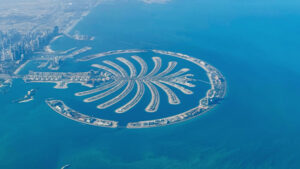
Dubai’s coastline has always been a reflection of ambition. Ambition that is deeply rooted in economic, demographic, and long-term planning.
And Palm Jumeirah and Palm Jebel Ali represent two very different chapters of that strategy, shaped by distinct market conditions and investor psychology.
One that attracts capital, talent, and long-term residency into the UAE.
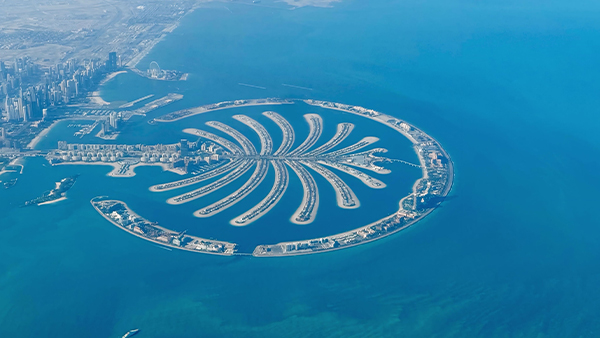
The Palm Jumeirah is complete, globally recognized, and priced accordingly, while Palm Jebel Ali is expansive, re-engineered, and launching into a far more mature property market.
Comparing the two involves timing, pricing cycles, and capital behaviour as Dubai’s real estate ecosystem evolves further.
Palm Jumeirah: A Fully Valued, High-Performance Market
Palm Jumeirah functions as a destination that enhances the UAE’s luxurious lifestyle and is a stabilized asset class.
With more than 15 years of transaction history, it has demonstrated resilience across economic cycles, including the 2008 financial crisis and the post-pandemic boom.
As of the 2025 market data, average prices for apartments in Dubai’s Palm Jumeirah start at AED 6 million and reach AED 23 million for exclusive waterfront properties.
It’s because the pricing is supported by consistent demand for luxury apartments in Palm Jumeirah and Dubai Marina.
The Stats Backing Up the Price
In 2025 alone, the Palm Jumeirah recorded one of the highest volumes of AED 10M+ residential transactions in Dubai, increased by more than 24 percent year-on-year, reinforcing its position as a capital-preservation zone.
Rental performance remains equally strong:
- Long-term rental yields: 5.5%-7%
- Short-term holiday rental yields: Up to 8% during peak tourism periods
- Occupancy levels: Above 80% for well-positioned units
Considering the statistics, buying an apartment in Palm Jumeirah is based on income reliability, resale liquidity, and global recognition.
This demand pattern also explains why apartments near Palm Jumeirah, particularly properties in Dubai Marina and Al Sufouh, continue to experience spillover interest at comparatively lower entry prices.
Why do Palm Jumeirah’s High Prices Hold
Palm Jumeirah operates under a fixed supply model.
Between 2020 and 2024, prices for apartments for sale in Palm Jumeirah rose by over 50%, outperforming several other prime districts.
This growth was driven less by speculation and more by scarcity, international demand, and strong absorption rates.
Having said that, if you plan to invest in Palm Jumeirah, read Avoiding Pitfalls: HNWI Guide to Dubai’s Real Estate.
Palm Jebel Ali: A Relaunch for a Different Market
Evidently, Palm Jebel Ali’s relaunch in 2023 was not a repeat of its original 2000s vision. It was recalibrated for a very different UAE.
Key market shifts since the original launch:
- The UAE population has surpassed 10 million
- Long-term residency programs, like the Dubai Golden Visa, have reduced buyer churn
- Foreign ownership laws supporting institutional investment
- Dubai’s investor-friendly tax incentives
The new Palm Jebel Ali master plan is approximately twice the size of Palm Jumeirah, offering:
- Over 110 kilometres of waterfront properties
- Wider fronds and significantly lower density
- Residential plots that are 1.8-2 times larger than Palm Jumeirah equivalents
Initial pricing reflects its early-stage position:
- Waterfront properties launched at 40%-60% lower per sq. ft. compared to Palm Jumeirah.
- Entry points structured to attract long-horizon investors rather than yield-focused buyers
This pricing gap is intentional. It represents early-cycle risk pricing rather than undervaluation.
Infrastructure: Immediate Access vs. Strategic Advantage
Palm Jumeirah’s strength lies in what already exists:
- Direct access to Sheikh Zayed Road
- Operational monorail connectivity
- Proximity to Dubai Marina, DIFC, and Media City
- Established hospitality, retail, healthcare, and education
Palm Jebel Ali’s advantage lies in what is being built:
- Proximity to Al Maktoum International Airport, currently undergoing an AED 128 billion expansion
- Integration with Dubai South’s logistics and commercial districts
From an infrastructure perspective, Palm Jumeirah offers convenience today while Palm Jebel Ali promises leverage for tomorrow.
Lifestyle Orientation: Density vs. Space
Palm Jumeirah is vibrant and visibly active. Hospitality density, nightlife, and constant footfall form part of its appeal.
Palm Jebel Ali takes a different approach:
- Lower residential density
- Greater emphasis on privacy and open space
- Focus on ultra-luxury resorts, wellness, and curated living
This shift reflects changing buyer preferences in the UAE, where demand is increasingly segmented rather than universal.
Investment Dynamics: Yield Curves vs. Appreciation Curves
The financial profiles of the two destinations differ clearly.
Palm Jumeirah brings immediate rental income, lower volatility, and strong resale liquidity, but with higher capital entry.
Palm Jebel Ali offers lower entry pricing, higher long-term appreciation potential, and a longer holding horizon, with limited short-term yield.
Both serve versatile property investments in Dubai relevant to different capital strategies.
How Developers Impact Emerging Waterfronts
In early-stage developments, execution risk outweighs location appeal. Delivery timelines, construction quality, and post-handover management determine actual returns.
This is where Danube Properties has strengthened its relevance by making luxury properties in Dubai accessible with its 0.5% and 1% payment plans.
With a track record of on-time delivery, transparent pricing, and structured payment plans, we have consistently outshone early market phases time and time again.
To know more, read Affordable Waterfront Property in Dubai: Expert’s Guide.
Final Take: Two Palms, Two Phases
Palm Jumeirah represents maturity, stability, and global recognition, while Palm Jebel Ali represents scale, foresight, and timing.
Both locations prove that Dubai’s real estate market no longer rewards hype alone.
Investors and buyers in the UAE now favour strategy understanding and aligning it with capital objectives.
That makes both the Palms a great investment, with the real questions: when to enter, under what strategy, and what aligns with your goals.
FAQs
What is the main difference between Palm Jebel Ali and Palm Jumeirah?
Palm Jumeirah is an established luxury waterfront community with ready-to-move-in homes and lifestyle amenities, while Palm Jebel Ali is a larger, emerging destination being developed in phases with future-oriented planning.
Which island is bigger – Palm Jebel Ali or Palm Jumeirah?
Palm Jebel Ali is significantly larger than Palm Jumeirah, offering more coastline, spacious plots, and a broader master plan for mixed-use living and growth.
Which destination offers immediate lifestyle and rental returns?
Palm Jumeirah delivers immediate access to amenities, established community infrastructure, and strong rental demand, making it favourable for those seeking near-term use or income.
Are properties available now on both islands?
Palm Jumeirah has ready properties available across apartments, villas, and townhouses, while Palm Jebel Ali mainly offers off-plan options with handovers planned in future phases.
Which island has better connectivity?
Palm Jumeirah benefits from established road access and existing transport links, while Palm Jebel Ali’s connectivity will grow with planned infrastructure and nearby economic zones.
Which island is considered better for rental yields?
Palm Jumeirah currently offers stronger rental yields due to established tourism and resident demand, whereas Palm Jebel Ali’s yield potential will become clearer after key phases of development are completed.