Dubai’s real estate has evolved into a data-driven, institutionally respected investment ecosystem.
Capital is more informed, regulations are clearer, market cycles are better understood, and returns are increasingly linked to income stability, absorption strength, and long-term planning.
When reflecting on broad market maturity and demand sustainability, Louis Harding (CEO, Betterhomes) states, “Dubai approaches 2026 from a foundation of real, underlying demand rather than speculative momentum.”
That means, for anyone looking to buy property in Dubai with long-term intent, the playbook has changed. What worked five years ago won’t necessarily work now, and that’s a good thing.
The Evolution: Dubai’s Real Estate Market in 2026
Dubai Land Department recorded an extraordinary year, surpassing 270,000 real estate transactions worth AED 917 billion, marking a strong 20% YoY growth in 2025.
Quoted by The Times of India, the Dubai real estate market saw 125,538 real estate transactions worth AED 431 billion right in the first half of 2025.
The volume is remarkable, and so are the buyers. Property investment in Dubai has never been so diverse and powerful.
According to GCC Business Watch, the market saw a sharp rise in participation, with nearly 193,000 investors active during the period, including 129,600 new entrants, with resident buyers constituting 56.6%, emphasizing strong domestic confidence.
Female investors also gained significant momentum, contributing AED 154 billion across more than 76,000 transactions.
“The market continued its strong upward trajectory in 2025, driven by sustained population growth and infrastructure investment. End-users became more discerning, while international buyers remained a key force,” said Farhad Azizi, Group CEO, Azizi Group of Companies, talking to the Gulf Pulse.
Upgrading lifestyles, securing permanent bases, relocating careers, and strategic investments from end-users, long-term residents, and investors now dominate demand.
This shift has fundamentally changed market behavior. The price growth has moderated, rental yields have stabilized, and supply pipelines are transparent.
Dubai’s property investments have turned more operational in 2026. And that means portfolios built today must function in real-world conditions: generating income, absorbing supply, and sustaining value through cycles.
More about Dubai’s Real Estate: Dubai Property Market Outlook: Is the Next Cycle a Boom or a Slowdown?
Think Portfolio, Not Property
From a conversation with Firas Al Msaddi, CEO, fäm Properties, Gulf Pulse quotes, “In 2026, logic will drive decisions. Buyers will no longer choose projects based on brand alone, but on whether the full offering makes sense: price, location, quality, payment structure, and long-term value.”
Seasoned investors design portfolios that can absorb short-term disruptions without forcing distressed decisions.
“Absorption will vary widely by location, developer credibility, and product quality,” Al Msaddi continues.
It’s because a single asset can perform well, but a portfolio performs consistently.
The most resilient investors in Dubai’s real estate play long-term. Instead of asking, “Which unit will double fastest?” they ask, “How do these assets work together toward a unified financial goal?”
A well-structured portfolio balances:
- Rental income for cash flow
- Capital appreciation for long-term growth
- Liquidity for flexibility and exits
Simply put, the growth vs. risk ratio needs to be ascertained based on an investor’s financial planning, and only then should they commit to real estate as an alternative investment.
This approach reduces exposure to vacancy cycles, interest rate changes, and localized oversupply.
Demand-based Location Selection
In 2026, location is less about branding and more about demand depth.
Data consistently shows that areas with metro connectivity, strong public transport, proximity to employment hubs, and established retail, education, and healthcare infrastructure maintain higher occupancy and faster resale velocity.
These locations also hold up during normalization phases. For anyone planning to buy property in Dubai, understanding this shift is critical.
High-absorption locations protect rental yields, shorten vacancy periods, and reduce downside risk. They form the foundation of sustainable property investment in Dubai, regardless of market sentiment.
More on connectivity influencing Dubai’s real estate: Dubai Metro Blue Line 2026: Which Communities Will See Price Surges?
Off-plan Properties as an Investment
Off-plan properties remain a key component in Dubai’s real estate investments, accounting for over 60% of transactions in recent years. However, profitability depends on structure.
Successful off-plan strategies focus on:
- Developers with a strong delivery record
- Payment plans that align with income timelines
- Projects designed for real end-users and investors
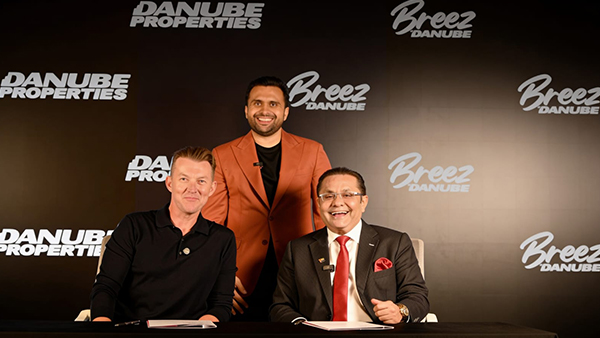
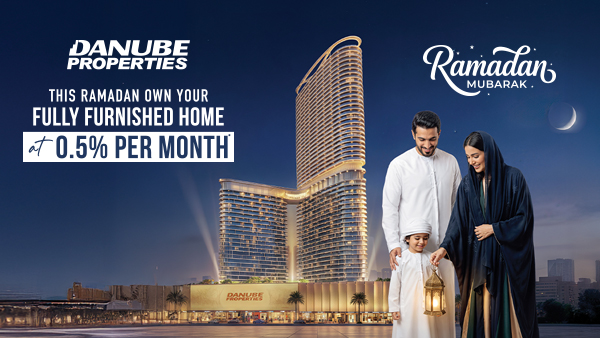
Developers like Danube Properties have earned credibility in this space by offering flexible payment plans, allowing off-plan assets to integrate smoothly into long-term portfolios.
Anchor The Portfolio around Rental Yield
Good rental income sustains and grows portfolios.
As per Gulf News, rental yields across Dubai rounded off at 7-10% in budget communities, with villas offering around 5 to 7%, outpacing many metropolitan cities across the globe.
In addition to extra income, these yields offer:
- Protection against market fluctuations
- Support for financing obligations
- Capital for reinvestment and compounding
Well-positioned residential assets in Dubai, particularly in the affordable and mid-luxury segments, are expected to continue delivering such net rental yields in 2026.
Key Performers: The most reliable performers are efficient layouts, competitively priced apartments, and communities with amenities that genuinely support daily living.
That’s where thoughtful developments create long-term value.
Structure Financing To Support Long-Term Growth
Leverage is powerful when used strategically.
But profitable portfolios use financing conservatively, ensuring rental income comfortably services debt, even during temporary vacancies.
With mortgage products in the UAE stabilizing, investors prefer:
- Predictable fixed-rate structures
- Conservative loan-to-value ratios
- Rental income that comfortably services EMIs
With decades of developer experience, one of the most effective strategies we have seen for property investment in Dubai is to view financing as a growth enabler, rather than a loan that strains your finances.
If you are a freelancer in Dubai, read Mortgage Guide for Freelancers in the UAE: Requirements, Steps, and Tips for Approval.
Portfolio Resilience Matters More Than Scale
Statistics, facts, and experience suggest that a five-property portfolio that survives market shifts will outperform a ten-property portfolio built on weak assumptions.
Resilient portfolios share common traits:
- Realistic rental expectations
- Assets suited to long-term residents
- Developers with strong after-sales and property management ecosystems
This is where practical, amenity-rich developments prove their worth. Properties designed for real occupancy tend to age better, rent faster, and exit more easily.
Defining an Exit Strategy Before Entry
Every asset in a portfolio should have a clear exit logic:
- Resale to end-users
- Refinancing after appreciation
- Long-term income hold
Liquidity varies significantly across Dubai’s real estate projects.
Units that appeal to residents, professionals, families, and long-term expats retain stronger resale demand and exit flexibility.
If an exit strategy relies solely on market optimism, risk increases substantially, and liquidity drops drastically.
Dubai Real Estate Portfolio Building Framework in 2026
Successful real estate investors in Dubai no longer rely on isolated property picks. Instead, they follow a structured approach that balances income, growth, flexibility, and risk management.
The table below outlines a practical framework for building a diversified, resilient real estate portfolio in Dubai in 2026, highlighting how different asset types and strategies work together to deliver sustainable returns.
| Portfolio Component | Purpose | Key Considerations | Ideal Strategy (2026) |
|---|---|---|---|
| Rental Yield Assets | Generate stable monthly cash flow | Location | Focus on mid-range apartments near metro, business hubs, and community centers |
| Capital Growth Assets | Long-term appreciation | Infrastructure projects, future developments | Invest in emerging but well-planned communities with upcoming amenities |
| Off-Plan Investments | Value creation and entry at lower prices | Developer credibility, handover timelines, and payment structure | Choose reputed developers with realistic delivery records |
| Diversification Layer | Reduce market risk | Property type, location mix, tenant segments | Mix studios, 1-bed, and 2-bed units across multiple districts |
Considering vast liquid capital, an ideal Dubai real estate portfolio in 2026 should aim for:
- 40-50% in high-yield rental assets
- 25-35% in capital appreciation properties
- 15-25% in off-plan or emerging-area investments
- 10%+ in highly liquid, easy-to-exit units
This structure balances wealth conservation and wealth generation at a lower risk tolerance.
Why Dubai Continues to Attract Global Capital in 2026
Despite global uncertainty, Dubai’s fundamentals remain compelling:
- Investor-friendly Tax Policies
- Transparent Regulatory Environment
- Strong Population Growth
- Golden Visa Incentives
- Infrastructure-led Urban Expansion
These factors continue to position the UAE as a preferred destination for long-term real estate capital. Unlike many global markets, policy alignment here favors continuity rather than disruption.
Moreover, these government policies contribute to creating a perfect investment zone that utilizes the Tax Edge for HNIs in Dubai’s Residential Real Estate.
The Takeaway
“Dubai is heading into 2026 in a phase of continued growth, albeit at a more measured and mature pace,” Arabian Business quotes Van Gelder, the director of residential brokerage at Espace Real Estate.
And building a profitable real estate portfolio in 2026 is about assembling assets that deliver steady income, controlled growth, and flexibility over time.
Those who buy property in Dubai, considering an investment portfolio, will continue to benefit from safer compounding returns in a mature, globally relevant market.
Regardless of the number of investors entering the market, the opportunity remains strong, but it now rewards a more intentional approach.
And Danube’s focus on accessible pricing, delivery credibility, and resident-centric developments reflects the same evolving investment landscape.